Note: XJXParts is not related to any product or model code such as ‘xjx-400’, ‘xjx-212’, or other similar terms. Our focus is exclusively on differential and drivetrain technology.

How to Choose a Diff Lock for the Ford Ranger

If you drive a Ford Ranger off-road with any regularity, you already know the frustration of spinning a wheel in the air while the rest of the truck sits stuck in mud. That is exactly the problem a Ford Ranger diff lock is designed to solve. Whether you are crawling over loose rock, navigating deep ruts, or hauling through waterlogged trails, a proper locking differential can be the difference between getting through and getting out your recovery gear.
This guide covers everything you need to know before buying: how differential locks work, which types suit different driving styles, what to look for in a quality unit, and how the most commonly considered options compare. By the end, you will have a clear picture of which diff lock makes the most sense for your specific Ranger build and how you use the truck.
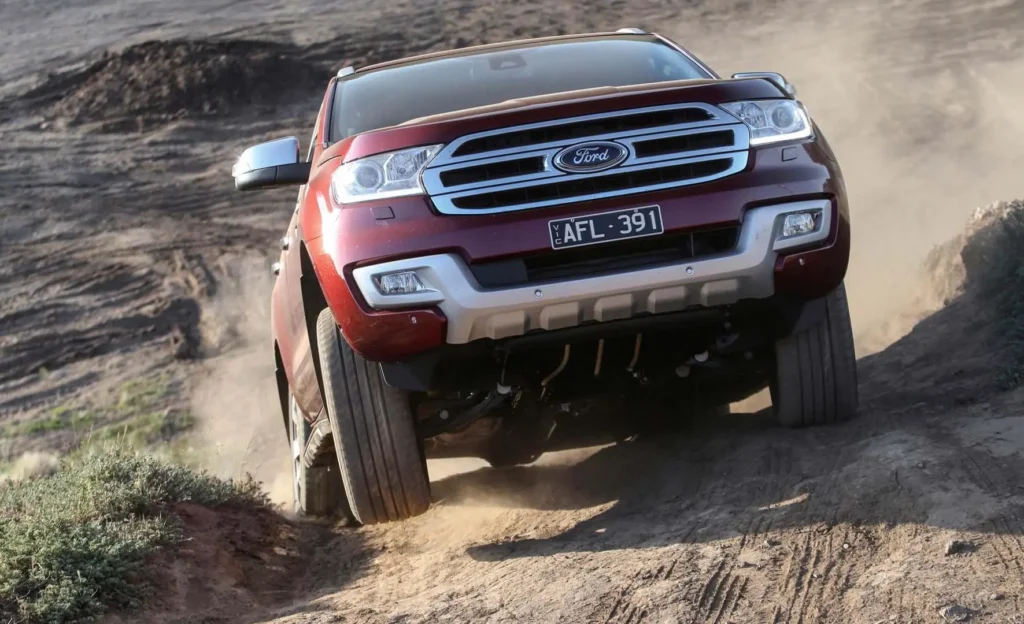
ford ranger diff lock

What a Diff Lock Actually Does

To understand why diff locks matter, it helps to know what a standard open differential does in the first place. Your Ranger’s factory differential allows the two wheels on an axle to spin at different speeds. This is necessary for normal road driving because the outer wheel covers more distance than the inner wheel when you turn a corner.
The problem is that an open differential naturally sends power to whichever wheel has the least resistance. On a slippery surface, that is usually the wheel that is already spinning freely. The result is a wheel spinning uselessly in the air or on loose mud while the wheel with traction gets almost no power at all.
A locking differential eliminates this by mechanically coupling both wheels on the axle so they rotate together at the same speed regardless of traction conditions. When both wheels are forced to turn at the same rate, the truck cannot lose traction on just one side. Power has nowhere to escape, so both wheels dig in.

Types of Diff Locks Available for the Ford Ranger

Not all differential locks work the same way, and choosing the wrong type for how you actually drive is one of the most common mistakes buyers make. There are three main categories worth understanding before you start comparing specific products.

Locker differentials

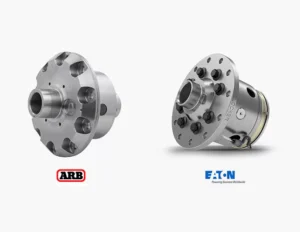
Locker differentials are the most aggressive option. These lock both wheels together completely and are designed for serious off-road use. The mechanical engagement means both wheels spin at identical speeds at all times when the locker is activated. They provide maximum traction but are not meant for extended on-road use in locked mode. Most lockers are driver-selectable, meaning you engage and disengage them manually when needed.

Limited slip differentials (LSDs)

Limited slip differentials (LSDs) sit between an open diff and a full locker. They allow a degree of slip between the two wheels but bias torque toward the wheel with more grip when slip is detected. They work automatically without any driver input and are transparent on normal roads. The tradeoff is that they do not provide the absolute traction of a full locker in severe off-road conditions.

Electronic locking differentials

Electronic locking differentials use a motor or solenoid to engage a locking mechanism at the push of a button. Many newer Ford Ranger models come with an electronic rear diff lock from the factory, but some trim levels still lack this feature, and aftermarket upgrades are popular for those who want front locking or a more robust rear lock than the stock unit provides.

Diff Lock Type Comparison: Which Is Right for Your Ranger?

Different locking options suit different use cases. The table below summarizes how the three main types compare across the criteria that matter most to Ranger owners.
Feature Full Locker Limited Slip (LSD) Electronic Locker
Traction Level
Maximum
Moderate
High
Engagement
Manual (driver-selectable)
Automatic
Button-activated
On-Road Usability
Not recommended when locked
Fully transparent
Normal when disengaged
Best For
Rock crawling, serious mud
Daily driving + mild trails
Versatile off-road use
Installation Complexity
Moderate to High
Moderate
Moderate to High
Price Range
Mid to High
Mid
Mid to High
Front Axle Option
Yes
Yes
Yes (select models)Yes (select models)
Maintenance Requirement
Low
Low to Moderate
Low
Use this table as a starting reference. Your specific terrain, driving frequency, and budget will determine which category makes the most sense before you narrow down to a specific brand or model.

Ford Ranger Diff Lock Compatibility: What You Must Check

One of the most critical steps when choosing a Ford Ranger diff lock is confirming compatibility before you buy. An incorrect selection can cause installation issues, drivetrain damage, or premature component failure. The Ford Ranger has been sold across multiple generations and markets, and the specifications vary more than many buyers expect.

1. Axle Type

Ford Ranger models differ by region and production year. Identifying your exact rear axle is the first step. Common configurations include:
  • Ford 8.8-inch axle (most common in North American and Australian-market Rangers)
  • Dana 44 and other Dana variants (found in select markets and older generations)

The axle housing determines which differential carrier and locker units physically fit. A diff lock built for an 8.8-inch axle will not fit a Dana housing, regardless of other specifications.

2. Spline Count

Spline count refers to the number of splines on the axle shaft where it connects to the differential side gear. Getting this wrong means the locker will not mate correctly with your existing axle shafts. The most common configurations on Ford Rangers are:
  • 28 spline (found on lighter-duty variants)
  • 31 spline (found on higher-capacity or upgraded axle configurations)

If you have upgraded your axle shafts already, confirm the spline count on the shafts themselves rather than assuming based on the factory spec.

3. Ring and Pinion Gear Ratio

The differential locker must be compatible with your existing ring and pinion gear ratio. Common factory gear ratios on the Ranger include 3.55, 3.73, and 4.10, though this varies by market and engine pairing. A locker carrier that does not match your gear ratio will not allow correct assembly, and attempting to force the fitment can cause serious drivetrain damage.

4. Model Generation

The Ford Ranger underwent significant platform changes across its generations. The third-generation Ranger (P375, 2019 onward in most markets) has different axle specifications from the second-generation (2011-2018) and the classic body-on-frame models produced before 2011. Always cross-reference by generation, not just by name.

If you are unsure of any of these specifications, the most reliable approach is to pull the axle tag (usually located on the differential housing) or consult a specialist who can identify the exact configuration before you order.

Key Factors to Evaluate Before You Buy

Shopping for a Ford Ranger diff lock involves more than picking a brand name off a list. The following criteria separate a well-matched purchase from one that causes regret.

Compatibility with your specific generation

A diff lock listed as fitting the Ranger may be built for a different axle configuration, gear count, or housing size than your particular model year. Always confirm compatibility by generation, model year, and axle type before ordering.

Rear versus front axle installation

Rear diff locks are the most impactful upgrade for most drivers because the rear axle drives the majority of the workload on soft terrain. A front locker adds capability but also adds complexity and can affect steering feel when engaged. Most buyers start with a rear locker and add a front unit later if their off-road use demands it.

Engagement method

Driver-selectable lockers give you full control. You engage when you need maximum traction and disengage when you return to normal driving. Automatic options engage based on wheel speed differences, which is convenient but may not always engage at the exact moment you want them to. For serious off-roading, most experienced drivers prefer selectable units.

Build quality and materials

A locking differential is a mechanical component subjected to significant forces. Hardened steel gears, precision machining tolerances, and quality surface treatments directly determine how long the unit holds up under repeated use, especially if you run larger tyres or higher horsepower than stock.

Ease of installation and parts availability

Some diff locks are designed for professional workshop installation only. Others are marketed as achievable for experienced home mechanics. Parts availability matters for long-term ownership, particularly if you use the truck in remote locations where you need to source replacement components quickly.

Rear vs. Front Locker: Which Should You Prioritize?

This question comes up constantly in Ranger forums and off-road communities, and the answer depends on your terrain.
For the majority of Ranger owners who do moderate off-roading including muddy trails, sand, snow, and loose dirt, a rear locking differential is the highest-value upgrade. The rear axle carries most of the weight in a pickup truck, and a rear locker dramatically improves traction without meaningfully changing how the truck behaves on paved roads when disengaged.
A front locker becomes valuable when you are regularly running technical terrain, steep hill climbs with loose surfaces, or rock crawling. In these situations, you want four wheels pulling simultaneously, and a front locker combined with a rear locker gives you that capability. Some drivers run a rear locker paired with a front limited slip as a compromise that covers most situations without the added complexity of dual full lockers.
If budget is a limiting factor, rear first is the almost universal recommendation from experienced off-road drivers.

What to Expect from Installation

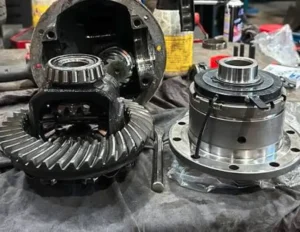
Installation difficulty varies by unit and by the mechanical skill of whoever is doing the work. Replacing differential internals is not a basic maintenance task. It involves draining the axle, removing the differential cover, pulling the ring gear and carrier, pressing out and pressing in components, setting bearing preload, and setting ring-and-pinion backlash correctly. Done wrong, a differential installation can destroy the new locker and your axle housing.
If you are not experienced with axle work, a specialist workshop is the right call. Budget for installation labour when comparing total cost of ownership between options, because a cheaper locker that requires significant setup time may end up costing more in shop hours than a premium unit that installs cleanly.
Many Ranger owners who fit lockers as part of a broader suspension lift or tyre upgrade have the work done at the same time to reduce labour duplication. If you are already planning a build, bundling the diff lock installation makes sense.

How a Ford Ranger Diff Lock Affects Driving Behavior

Understanding what changes once you have a locking differential installed helps you use it correctly and avoid damaging it.

  • On the trail, traction improves immediately and noticeably. Both rear wheels dig in together instead of one spinning helplessly. On loose surfaces, the truck feels planted and purposeful in ways it simply was not before. Steep, slippery climbs that previously required momentum and luck become manageable with consistent power delivery to both wheels.
  • In deep mud or sand, the locker eliminates the most common failure mode. An open differential in soft terrain almost always ends with one wheel spinning and the truck going nowhere. With a locker engaged, power is distributed mechanically regardless of which wheel has less resistance, and the truck continues to move forward.
  • On paved roads, a locked differential must be disengaged. Because both wheels are forced to spin at the same rate, turning creates binding in the drivetrain. All quality lockers are designed to be disengaged when you return to normal roads. Driving with a locker engaged on pavement can damage tyres, driveshafts, and the locker itself. This is not an optional precaution.
  • The transition between locked and unlocked is smooth on quality selectable units. Experienced Ranger owners develop a feel for when to pre-engage a locker before entering a difficult section and when to wait until they are already in it. Most selectable lockers will not engage cleanly if there is significant torque load on the differential, so the standard technique is to momentarily relieve load, engage, then apply throttle.

Common Questions About Ford Ranger Diff Locks

Does a Ford Ranger come with a diff lock from the factory?

Some Ranger variants do include an electronic rear diff lock as a factory option, particularly on higher trim levels and off-road packages. Many base and mid-level trims do not include it, and the factory unit, where fitted, can still be supplemented or replaced with a more capable aftermarket option.

Will a diff lock affect my tyre wear?

When properly disengaged on paved roads, a quality locker has no negative effect on tyre wear. Tyre wear issues arise when drivers forget to disengage or attempt to use a locker on hard surfaces where both wheels cannot turn at the same rate freely.

Does fitting a diff lock void my warranty?

This depends on your jurisdiction and your dealership’s position. In many markets, a dealer cannot void a warranty simply because an aftermarket part was fitted. However, if a warranty claim is directly related to a modification, coverage may be affected. Check with your dealer before fitting any aftermarket drivetrain components if warranty coverage is a concern.

Can I fit a diff lock to the front axle on a 4x4 Ranger?

Yes, front axle lockers are available for compatible Ranger models. Installation is more complex than a rear unit and affects steering behavior when engaged, so most owners who run a front locker are experienced off-road drivers who understand how to use it safely.

Making the Right Decision for Your Ranger

A Ford Ranger diff lock is one of the most practical off-road upgrades you can make because it directly addresses the fundamental limitation of an open differential: the tendency to send power where it is least useful. The right locker, correctly installed, transforms how the truck handles challenging terrain without making it unpleasant to drive on normal roads.
Start by identifying whether a rear locker alone covers your needs or whether you need dual locking for the type of driving you do. Confirm compatibility with your specific Ranger generation and axle configuration before purchasing. Factor in installation cost, not just part cost, when comparing options. And buy from a manufacturer with a track record of quality materials and consistent fitment.
The investment pays off every time you drive through terrain that would have stopped you before.

If you are sourcing a diff lock for your Ford Ranger and want to work directly with a manufacturer, XJXPARTS specializes in differential components with custom-specification options available. Contact us to discuss your build requirements.
Don’t Stop Here

More To Explore

do-you-need-an-e-locker-differential

Do You Need an E-Locker Differential?

For many drivers exploring off-road capability, the idea of upgrading to a locking differential—especially an electronic locking differential (E-locker)—comes up quickly. It’s often described as

download catalog now!