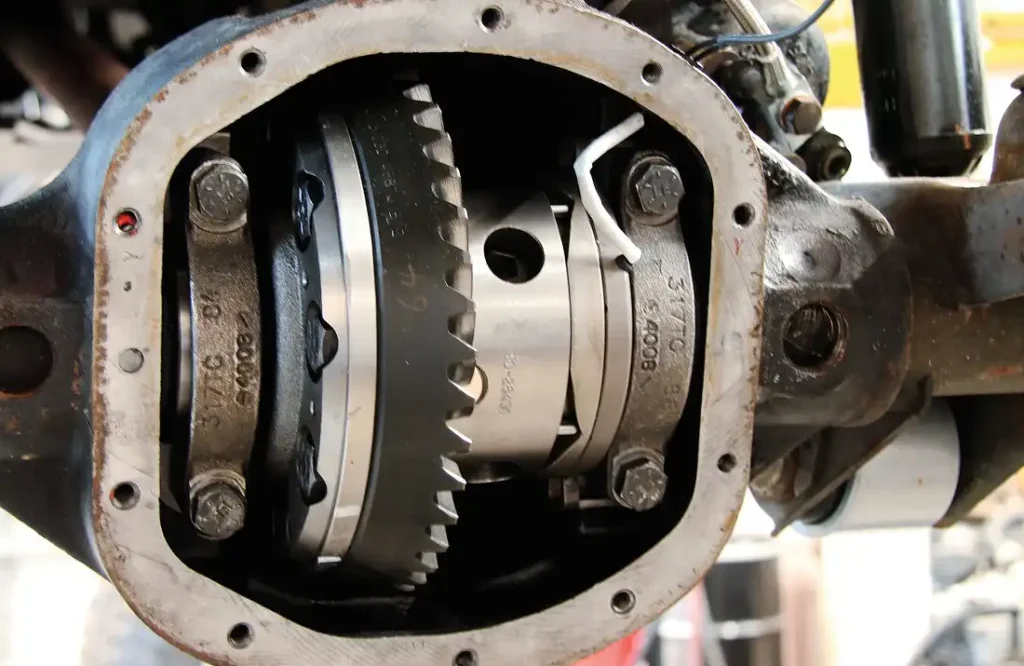
Note: XJXParts is not related to any product or model code such as ‘xjx-400’, ‘xjx-212’, or other similar terms. Our focus is exclusively on differential and drivetrain technology.

LSD vs Open Differential: What’s the Difference and Which One Do You Need?

When shopping for a vehicle or upgrading a drivetrain, one of the most common questions mechanics, fleet managers, and off-road enthusiasts ask is: what’s the difference between a limited slip differential and an open differential? The answer matters — not just for performance, but for safety, durability, and the total cost of ownership.

This guide breaks down how each type works, where each one excels, and how to choose the right differential for your specific application.

What Is an Open Differential?

An open differential is the standard differential found in most passenger vehicles. Its primary job is to allow the two wheels on the same axle to rotate at different speeds — essential when cornering, since the outer wheel travels a longer distance than the inner wheel.

How It Works

Inside an open differential, a set of spider gears distributes torque between the left and right output shafts. The torque split is always equal — but wheel speed can vary freely between the two sides.
This design is mechanically simple, cost-effective, and perfectly adequate for everyday driving on paved roads.

The Weakness: Torque Goes Where Resistance Is Lowest

Here’s the critical limitation: an open differential always sends torque to the wheel with the least traction. If one wheel is on ice, mud, or lifted off the ground, that wheel spins freely — and the vehicle goes nowhere. This is the classic “one wheel peel” scenario that frustrates off-roaders and can leave commercial vehicles stranded on uneven terrain.
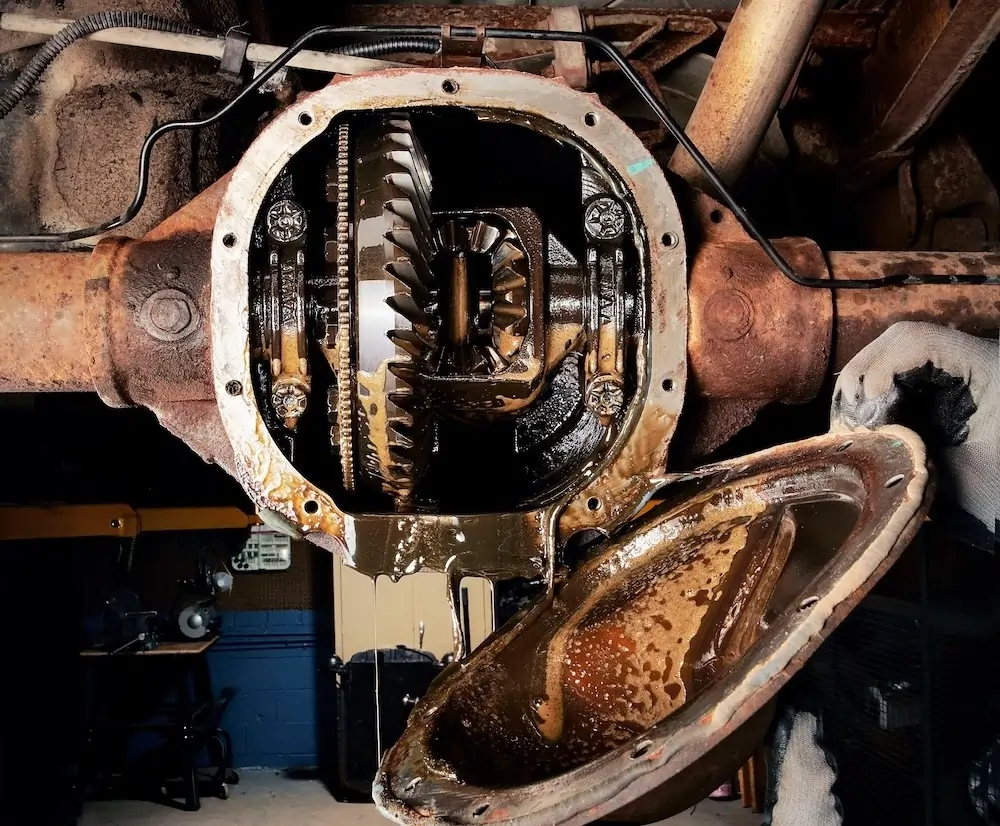
lsd vs open diff

What Is a Limited Slip Differential (LSD)?

A limited slip differential (LSD) solves the core weakness of an open differential. It uses a mechanical or electronic system to detect wheel speed differences and transfer torque toward the wheel with more traction — rather than less.
The result: both wheels contribute to forward motion, even when one has significantly less grip than the other.

Common Types of LSD

Clutch-type LSD — Uses friction clutch packs that engage when wheel speed differences exceed a threshold. Popular in performance and motorsport applications. Requires periodic fluid maintenance.
Helical (Torsen-style) LSD — Uses worm gears to bias torque automatically and progressively. No clutch packs, no maintenance, no sudden engagement. Preferred for commercial vehicles and daily drivers that need reliable traction without driver input.

Electronic LSD (eLSD) — Uses sensors, solenoids, and the vehicle’s ABS/stability control system to manage torque distribution. Common in modern passenger cars and SUVs.
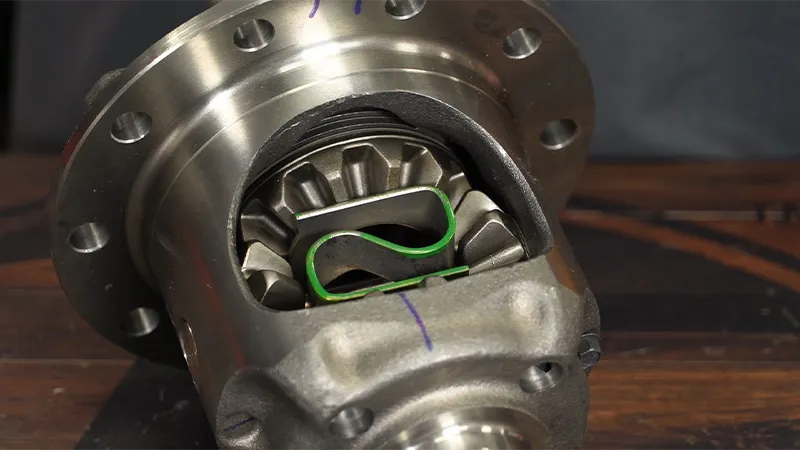
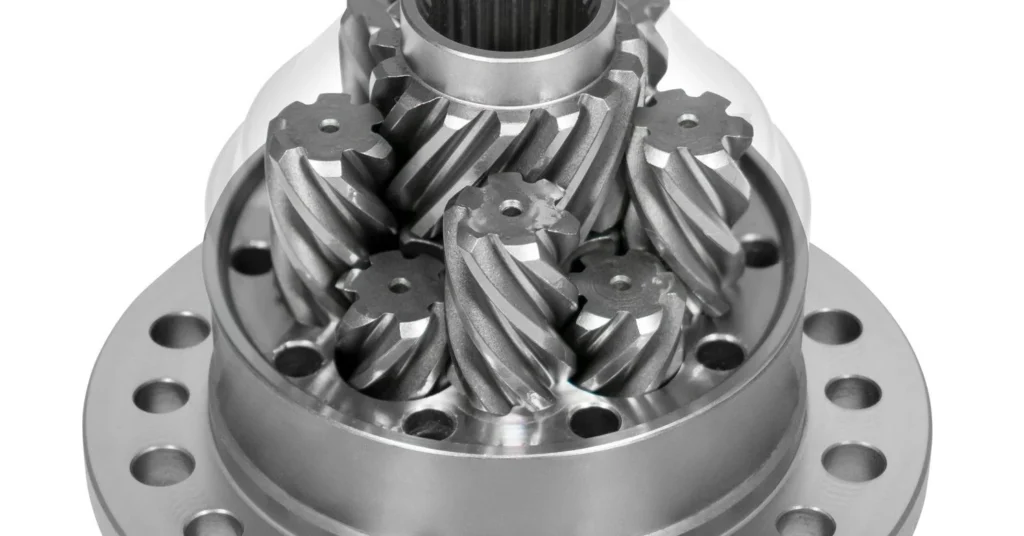
power lock limited slip differential
Clutch-type
Helical LSD
Helical LSD
elocker diff in car
Electronic LSD

LSD vs Open Differential: Direct Comparison

Feature Open Differential Limited Slip Differential
Traction on low-grip surfaces
Poor
Good to Excellent
Cornering behavior
Neutral, predictable
Slightly more understeer
Mechanical complexity
Simple
Moderate
Maintenance requirements
Minimal
Occasional (clutch-type) or none (helical)
Cost
Lower
Higher upfront
Best for
Normal road driving
Off-road, performance, commercial, mixed terrain
Wheel spin under power
High (one wheel)
Low (balanced)

When an Open Differential Is Sufficient

An open differential is the right choice when:
  • The vehicle operates exclusively on paved, well-maintained roads
  • Low-traction situations (mud, gravel, ice) are rarely or never encountered
  • Budget is the primary constraint
  • The vehicle is lightweight with a low center of gravity

For standard passenger cars driven in urban environments, an open differential does the job reliably and without any additional maintenance cost.

When You Should Upgrade to an LSD

An LSD becomes the better choice — and sometimes the necessary one — in the following situations:

  • Off-road and 4WD applications Uneven terrain constantly challenges traction. An LSD keeps vehicles moving where an open differential would leave them stuck.
  • High-performance and motorsport Drivers need predictable, controlled power delivery out of corners. A clutch-type or helical LSD prevents inside-wheel spin and improves lap times.
  • Fleet and commercial vehicles Trucks, vans, and work vehicles that carry heavy loads or operate on mixed terrain benefit from the added traction margin an LSD provides, reducing downtime and improving driver confidence.
  • Towing and hauling When the rear axle is loaded unevenly, traction distribution becomes uneven. An LSD compensates automatically without driver input.
  • Regions with winter conditions Vehicles operating in snow, sleet, or ice benefit significantly from LSD traction, especially during acceleration from a stop.

Which LSD Type Is Right for Your Application?

Application Recommended LSD Type
Daily driver / passenger car
Helical (Torsen-style) or electronic LSD
Off-road 4WD
Clutch-type LSD or locking differential
Motorsport / drifting
Clutch-type LSD (high bias ratio)
Commercial / fleet vehicles
Helical LSD (low maintenance, reliable)
Towing / heavy hauling
Helical LSD or clutch-type
OEM replacement
Match original specification

Upgrading from Open Diff to LSD: Is It Possible?

In most cases, yes. Many OEM differential housings are designed to accept both open and limited slip internals. This makes an LSD retrofit a practical upgrade for work vehicles, off-road builds, and performance applications without requiring a full axle replacement.
The feasibility depends on the specific axle housing, ring gear size, and available aftermarket options for that platform. Custom and semi-custom LSD solutions also exist for less common axle specifications.

Frequently Asked Questions

Does an LSD wear out? Clutch-type LSDs do experience wear over time and require the correct friction modifier additive in the differential fluid. Helical and electronic LSDs have no wear components that require scheduled replacement.
Will an LSD affect my fuel economy? The effect is negligible in normal driving. Under traction-challenging conditions, an LSD can actually reduce fuel consumption by preventing wheel spin and keeping power delivery efficient.

Is an LSD the same as a locking differential? No. An LSD biases torque toward the wheel with more traction but still allows some speed difference between wheels. A locking differential rigidly locks both wheels to spin at the same speed — more effective in extreme off-road conditions, but unsuitable for normal road use.

Final Thoughts

The choice between an open differential and a limited slip differential ultimately comes down to your operating environment and performance requirements. Open differentials are simple, affordable, and adequate for standard road use. Limited slip differentials deliver measurable advantages in traction, stability, and control — particularly in demanding applications like off-road driving, commercial hauling, and performance motorsport.
If you’re unsure which differential configuration is right for your vehicle or fleet, the best approach is to start with your axle specifications and intended use case.

Need a Custom LSD Solution?

At XJX Parts, we manufacture and supply limited slip differentials and differential components for a wide range of vehicle platforms — including custom and semi-custom configurations for applications where standard off-the-shelf options fall short.
Whether you’re sourcing for a single vehicle upgrade or a full fleet specification, our engineering team can help you identify the right differential solution.

Contact us today to discuss your requirements!
Don’t Stop Here

More To Explore

download catalog now!