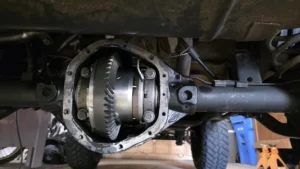
When it comes to vehicle dynamics, few components are as misunderstood or as impactful as the differential. While most daily drivers utilize a standard “open” differential, automotive enthusiasts, track racers, and off-road adventurers know that the real magic happens when you upgrade to a Limited Slip Differential (LSD).
The primary job of any differential is to allow the drive wheels to rotate at different speeds—a necessity when turning, as the outside wheel must travel a longer path than the inside wheel. However, the open differential has a fatal flaw: it sends power to the path of least resistance. If one wheel loses traction on ice, mud, or during hard cornering, that wheel spins helplessly while the wheel with grip receives zero power.
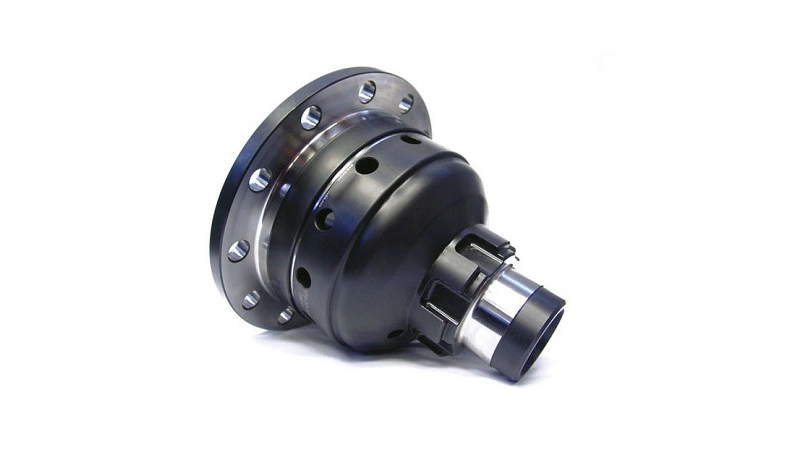
A Limited Slip Differential solves this problem by bridging the gap between an open differential and a fully locked one. It provides the flexibility needed for smooth cornering while ensuring that torque is distributed to the wheel that actually has the traction to move the vehicle forward.
Here are the top five benefits of utilizing a Limited Slip Differential and why it is considered one of the most essential upgrades for any performance-oriented or utility vehicle.
1. Superior Traction in Challenging Conditions
The most immediate and noticeable benefit of an LSD is the dramatic improvement in traction. In a standard open differential setup, traction is limited by the wheel with the least amount of grip. This is why you often see cars stuck in the snow with one wheel spinning furiously while the other remains stationary.
An LSD functions by sensing the speed differential between the two wheels. When one wheel begins to slip, the internal mechanisms of the LSD—whether they be clutches, gears (like a Torsen or Helical design), or viscous fluids—engage to transfer a portion of the engine’s torque to the wheel with more grip.
- Winter Driving: On icy or snowy roads, an LSD ensures that if one tire hits a patch of black ice, the other tire can still provide the thrust needed to keep the vehicle moving.
- Off-Roading: For those who frequent trails, an LSD helps navigate uneven terrain where one wheel might lift off the ground or end up in a soft mud hole.
2. Enhanced Cornering Performance and Exit Speed
For performance driving and track enthusiasts, the LSD is arguably the most important piece of hardware in the drivetrain. The benefits are most apparent during “corner exit”—the moment you transition from braking into acceleration as you leave a turn.
In a high-powered rear-wheel-drive car with an open differential, applying throttle mid-corner often causes the “unloaded” inside wheel to spin. This results in a loss of acceleration and can often trigger electronic traction control systems that cut engine power, further killing your momentum.
With an LSD, the torque is diverted to the outside wheel, which is heavily loaded and has the most grip. This allows the driver to:
- Apply Power Earlier: You don’t have to wait for the car to be completely straight before pinning the throttle.
- Maintain Balance: By distributing power more evenly, the car remains more stable under lateral loads.
- Reduce Understeer: In front-wheel-drive applications, an LSD is transformative. It pulls the car into the apex of the corner rather than allowing the front end to “plow” wide as the inside tire loses grip.
3. Improved Safety and Predictability
While often marketed as a performance upgrade, the safety implications of a Limited Slip Differential are significant. Modern vehicles rely heavily on Electronic Stability Control (ESC) and Traction Control Systems (TCS). These systems primarily work by applying the brakes to a spinning wheel or reducing engine torque.
While effective, these electronic interventions are “reactive”—they happen after the loss of traction has occurred and often result in a jerky, intrusive driving experience. An LSD is a “proactive” mechanical solution. It manages torque distribution before the wheels spin out of control, leading to a much smoother and more predictable vehicle response.
- Stability at High Speeds: During high-speed lane changes or emergency maneuvers, an LSD helps keep the vehicle tracking straight by ensuring both drive wheels are contributing to the vehicle’s forward path.
- Reduced Hydroplaning Risk: If one side of the vehicle hits a deep puddle, an LSD helps prevent that side from losing all drive force, which helps maintain the car’s heading.
4. Reduced Tire and Drivetrain Wear
It might seem counterintuitive that a performance part could reduce wear, but in the case of the differential, it is absolutely true. One of the leading causes of premature tire wear in high-torque vehicles is “one-wheel peel”—the act of a single tire spinning excessively under load.
When an open differential allows one wheel to spin at high speeds while the vehicle is moving slowly, it creates immense heat and friction on that specific tire’s tread. Over time, this leads to uneven tire wear and the need for frequent replacements.
Furthermore, the sudden “shock” of a spinning tire regaining grip (traction snap) can put immense stress on axles, CV joints, and the transmission. Because an LSD manages the transition of power more fluidly and prevents extreme wheel-speed deltas, it creates a more “harmonious” environment for the entire drivetrain.
For commercial vehicles or trucks that carry heavy loads, this means fewer mechanical failures and a longer lifespan for expensive rear tires.
5. Increased Resale Value and Vehicle Versatility
Investing in a high-quality Limited Slip Differential is one of the few aftermarket or optional equipment choices that significantly boosts the “curb appeal” and resale value of a vehicle.
In the secondary market, buyers of trucks, sports cars, and SUVs specifically look for “LSD” or “Positraction” in the spec sheet. It signals that the vehicle is more capable and better equipped for demanding tasks.
Beyond monetary value, an LSD increases the versatility of your current vehicle. It can turn a standard commuter car into a competent weekend autocross contender, or a standard work van into a vehicle capable of navigating muddy construction sites without needing a tow. Instead of buying a new 4WD vehicle, many owners find that simply adding an LSD to their 2WD vehicle provides all the extra capability they actually need.
Choosing the Right LSD for Your Needs
Not all Limited Slip Differentials are created equal. Depending on your driving style and vehicle type, you may choose between several designs:
| Type of LSD | Best For | Key Characteristic |
|---|---|---|
|
Clutch-Type |
Racing & Drifting |
Highly tunable, but requires maintenance (clutch replacement). |
|
Helical / Torsen |
Street & Track |
Maintenance-free, gear-based, very smooth engagement. |
|
Viscous |
Modern Daily Drivers |
Uses silicone fluid; smooth but can lose effectiveness when hot. |
Understanding these nuances is key to maximizing the benefits listed above. A gear-driven (Helical) unit is often preferred for street-driven performance cars due to its longevity and lack of noise, while clutch-type units are the gold standard for dedicated drift or drag cars where specific locking percentages are required.
For a deeper dive into the mechanical differences between these systems, we recommend exploring our comprehensive technical comparison guide on Clutch LSD vs. Torsen Differentials. This guide provides a granular look at the internal components and torque-biasing characteristics of each design to help you make the most informed decision for your specific build.
The Mechanical Advantage
The transition from an open differential to a limited slip setup is often described by drivers as “the day the car finally felt connected.” By ensuring that your engine’s power isn’t being wasted by the wheel with the least resistance, you unlock the true potential of your chassis.
From the peace of mind during a sudden rainstorm to the exhilaration of powering out of a tight hairpin turn, the LSD is a silent partner in your vehicle’s performance. It is a testament to the fact that sometimes, the most significant improvements aren’t found in how much power you make, but in how effectively you put that power to the ground.
At XJXPARTS, we specialize in manufacturing high-precision drivetrain components designed to withstand the rigors of both daily driving and heavy-duty use. As a dedicated factory, we provide the reliability your vehicle deserves. For inquiries or custom orders, feel free to contact us today.