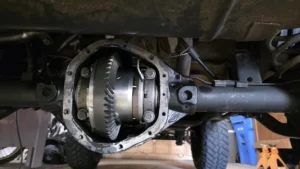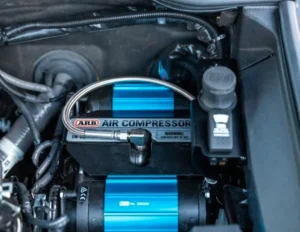
E-lockers are widely used in off-road vehicles, utility trucks, performance 4×4 builds, and commercial fleets where traction consistency is critical. While many people understand what a locking differential does, fewer understand that electronic differential locks are built on different internal architectures, and those structural differences directly affect durability, maintenance requirements, and long-term performance.
This article explains: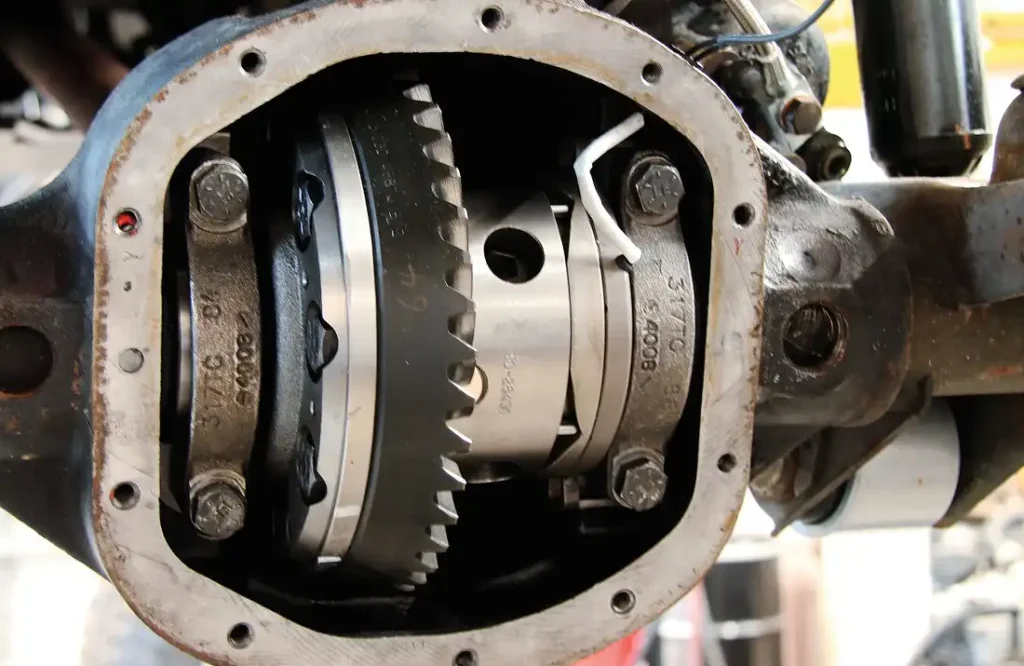
What Is an Electronic Differential Lock?
A standard open differential allows the left and right wheels to rotate at different speeds. This is essential for smooth cornering. However, when one wheel loses traction—such as on mud, snow, sand, or rocks—the open differential sends most torque to the wheel with the least resistance.
A locking differential solves this problem by mechanically connecting both axle shafts so that torque is distributed evenly.
An electronic differential lock performs this locking function using an electric actuator (motor or solenoid) instead of air pressure or manual engagement.
- Open Mode – behaves like a standard differential for normal driving.
- Locked Mode – both axle shafts rotate together at the same speed.
How Does an Electronic Differential Lock Work?
Although actuator mechanisms vary slightly between manufacturers, most E-lockers follow this basic process:
- The driver activates a switch.
- An electric motor or solenoid moves a locking mechanism.
- Internal components engage to prevent differential action.
- Both wheels receive equal rotational speed.
What changes between designs is whether torque transfer depends on:
- Friction plates
- Direct gear engagement
- Worm gear torque biasing
These distinctions define the three primary types of electronic differential locks.
Types of Electronic Differential Locks
1. Clutch-Based (Friction Plate) Electronic Differential Lock
Structural Design
Clutch-based E-lockers use a stack of friction discs and steel plates similar to those found in clutch-type limited slip differentials. When engaged, the actuator compresses the clutch pack, increasing friction between the plates until both axle shafts rotate together.
In some systems, the clutch pack also contributes to partial torque bias even before full lock.
How Torque Is Transferred
Torque transfer depends on surface friction. The more pressure applied to the clutch stack, the stronger the locking effect.
Advantages
- Smooth engagement
- Compact packaging
- Lower manufacturing complexity
- Quieter transition in some setups
Mechanical Limitations
Friction materials are wear components. Over time:
- Friction surfaces glaze
- Heat builds under heavy load
- Locking efficiency decreases
- Slippage can occur under extreme torque
Because the clutch pack sits inside the differential carrier, servicing requires significant disassembly.
For light-duty applications, clutch-based E-lockers can perform adequately. However, under repeated high-load conditions, wear is inevitable.
2. Open Differential–Based Electronic Differential Lock
Structural Design
This design begins with a standard open differential layout. When activated, a sliding locking collar or mechanical dog gear physically connects one side gear to the differential case.
Instead of relying on friction, this system relies on solid gear engagement.
Many OEM manufacturers have used similar mechanical principles in factory electronic lockers, including systems developed by Toyota for off-road platforms.
How Torque Is Transferred
Torque flows directly through gear teeth once engaged. There are no consumable friction surfaces involved.
Advantages
- No clutch wear
- Stable locking strength over time
- Lower heat generation
- Reduced maintenance requirements
- Consistent engagement reliability
Considerations
Engagement can feel more mechanical compared to clutch systems, but this is often considered a durability trade-off rather than a disadvantage.
From a structural standpoint, open diff–based E-lockers are widely regarded as more robust than friction-based designs.
3. Torsen-Based Electronic Differential Lock
Structural Design
Some advanced E-locker designs integrate a Torsen gearset with an electronic locking mechanism, allowing the system to function as:
- A torque-biasing differential during normal driving
- A fully locked differential when activated
The torque-sensing principle is well known in driveline engineering and has been used in systems such as Audi Quattro configurations.
How Torque Is Transferred
- Normal mode: torque bias via worm gear resistance.
- Locked mode: mechanical locking collar eliminates differential action.
Advantages
- No friction plates
- Automatic torque bias during regular driving
- High durability
- Minimal performance degradation over time
- Strong mechanical lock when engaged
Considerations
Manufacturing complexity and machining precision requirements are higher, which can increase cost.
However, in terms of wear resistance and long-term stability, Torsen-based E-lockers are among the most durable electronic differential lock designs available.
Comparison of Electronic Differential Lock Types
| Feature | Clutch-Based | Open Diff–Based | Torsen-Based |
|---|---|---|---|
|
Wear Components |
Yes (friction discs) |
No |
No |
|
Heat Sensitivity |
High |
Low |
Very Low |
|
Long-Term Locking Strength |
Can decrease |
Stable |
Stable |
|
Maintenance Complexity |
Higher |
Low |
Low |
|
Torque Bias Capability |
Limited |
None in open mode |
Yes |
|
Best for |
Light duty |
Heavy duty |
Mixed on/off-road |
Why Gear-Based Electronic Differential Locks Are Often More Durable
The durability difference comes down to physics.
Clutch-based systems convert mechanical energy into heat through friction. Every locking event generates thermal stress. Over time, this leads to surface wear and reduced torque capacity.
Gear-based systems, by contrast, transmit torque through mechanical interlocking. When properly heat-treated and lubricated, gear teeth can operate for extremely long service intervals with minimal degradation.
This is why open differential–based and Torsen-based electronic differential locks are commonly preferred in:
- Heavy-duty off-road applications
- Commercial vehicles
- High-torque builds
- Long-distance expedition vehicles
Which Electronic Differential Lock Should You Choose?
The correct choice depends on intended use:
For heavy load and commercial reliability:
Open diff–based or Torsen-based E-lockers are typically better suited.
For mixed daily driving and off-road performance:
Torsen-based designs provide both automatic torque biasing and strong lock capability.
For occasional recreational use with budget sensitivity:
Clutch-based E-lockers may be sufficient, but long-term wear should be considered.
Understanding internal structure is essential before selecting a system.
Final Thoughts
An electronic differential lock is more than just a switchable traction device. Its internal architecture determines durability, maintenance demands, and torque stability.
Clutch-based designs rely on friction and are more susceptible to wear.
Open differential–based systems use direct gear engagement for consistent strength.
Torsen-based E-lockers combine torque bias intelligence with gear-driven durability.
If you are sourcing open diff–based or Torsen-style electronic differential locks, XJXPARTS manufactures both configurations in-house for wholesale and custom applications. As a factory supplier, we support bulk orders and technical inquiries. Contact us now!