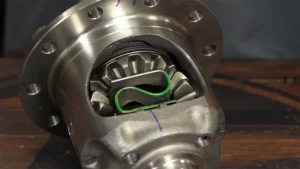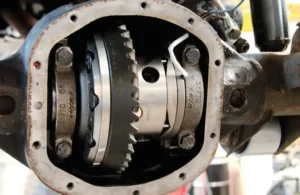
The BMW E46 remains one of the most popular platforms for enthusiasts, tuners, and performance workshops. Whether used for daily driving, track days, or drifting, the differential plays a crucial role in how the car transfers power to the rear wheels.
However, many guides discussing the BMW E46 differential overlook a critical technical detail: the E46 platform actually uses two completely different differential sizes—188 mm and 210 mm. Understanding this distinction is essential before choosing any limited slip differential (LSD) upgrade.
This guide explains how the E46 differential system works, the differences between the 188 and 210 differentials, and the most common LSD upgrade options available today.

Why the BMW E46 Differential Matters
A differential allows the rear wheels to rotate at different speeds while transmitting engine torque. During cornering, the outer wheel travels a longer distance than the inner wheel. Without a differential, this would cause drivetrain stress and poor handling.
Most standard E46 models came with an open differential, which prioritizes smooth driving and low cost but limits traction under performance conditions.
When traction becomes uneven—such as during aggressive acceleration, track driving, or drifting—an open differential sends most of the torque to the wheel with the least grip. This is where a limited slip differential (LSD) becomes valuable.
- Better acceleration out of corners
- Improved traction in low-grip conditions
- More predictable handling during performance driving
Because of these advantages, LSD upgrades are one of the most popular modifications for the E46 platform.
The Two BMW E46 Differential Types: 188 vs 210
One of the most misunderstood aspects of the E46 drivetrain is that not all E46 differentials are the same size. BMW used two main differential housings during this generation.
188 mm Differential (Medium Case)
- 318i / 318Ci
- 320i
- 323i
- 325i / 325Ci
- 328i
- 330i / 330Ci
- Medium-sized housing
- Compatible with most aftermarket LSD units
- Widely supported by performance manufacturers
- Ideal for street and moderate track builds
Because of its popularity, most aftermarket LSD products are designed specifically for this differential size.
210 mm Differential (Large Case)
- Larger ring gear (210 mm)
- Higher torque capacity
- Stronger internal components
- Designed for high-performance applications
The larger housing provides greater durability under heavy load, which is why BMW equipped the M3 with this differential.
However, this also means LSD components for the 210 differential are not interchangeable with the 188 version. Many online guides fail to highlight this, leading to confusion during upgrades.
Before purchasing any LSD, confirming which differential your E46 uses is essential.
Why Upgrade the E46 Differential to LSD
Upgrading to a limited slip differential transforms how the car behaves under power.
Instead of allowing one wheel to spin freely, an LSD distributes torque between both rear wheels. This improves traction and control in several driving scenarios.
- Improved corner exit traction: Both wheels receive torque, allowing the car to accelerate more efficiently out of turns.
- Better stability during aggressive driving: Power delivery becomes smoother and more predictable.
- Enhanced performance for drifting and track use: Many performance drivers consider LSD upgrades essential for maintaining consistent control.
Because the E46 platform is widely used in motorsports and enthusiast driving, LSD upgrades have become a standard modification.
Types of Limited Slip Differentials for BMW E46
- Helical LSD (street performance)
- Clutch-type LSD (track and drift)
- OEM-style LSD upgrades
Each type uses a different internal mechanism to manage torque distribution.
Helical LSD (Street Performance)
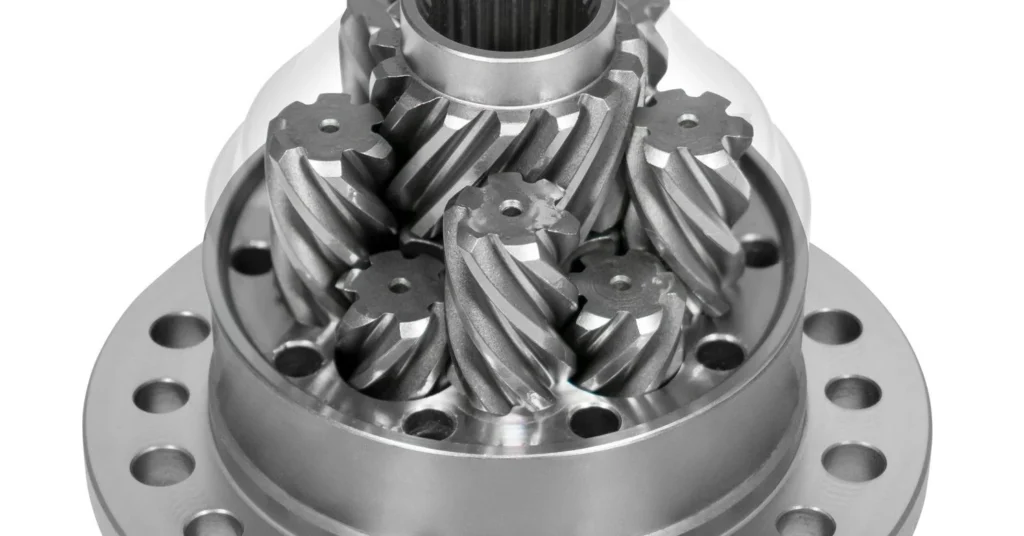
Helical differentials—also known as torsen-style LSDs—use a series of gears to distribute torque automatically. Instead of clutch plates, they rely on helical gears that respond to traction differences between wheels.
Advantages include:- Smooth and quiet operation
- Minimal maintenance requirements
- Excellent street drivability
- Immediate torque response without manual adjustment
One well-known manufacturer offering helical LSD solutions for BMW differentials is XJXPARTS. XJXPARTS is a brand with over 20 years of history, trusted by enthusiasts worldwide, and especially popular in the United States and Australia. Renowned for its high cost-performance ratio, XJXPARTS delivers reliable and smooth differentials at an affordable price.
- street performance builds
- high-power daily drivers
- track day cars that require predictable handling
They are less aggressive than clutch-type differentials but provide excellent balance between performance and comfort.
Clutch-Type LSD (Track and Drift Applications)
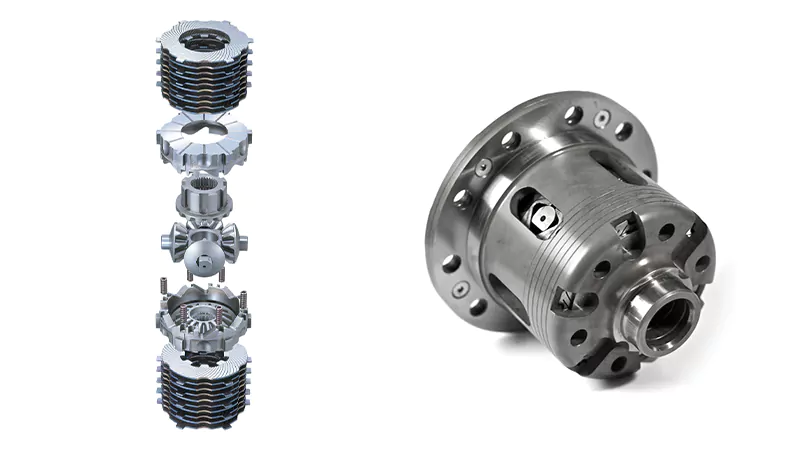
Clutch-type LSDs are the most common design used in motorsport. Instead of gears alone, they use friction plates and preload springs to control torque distribution.
When torque increases, the clutch plates engage and lock both wheels together.
- Strong lock-up characteristics
- Adjustable engagement settings
- Excellent traction during aggressive driving
- Ideal for drifting and racing
- OS Giken
- Kaaz
OS Giken is widely recognized for its multi-plate Super Lock LSD, which offers extremely progressive engagement and high durability.
Kaaz, on the other hand, is well known in drifting communities and offers 1.5-way and 2-way LSD configurations designed specifically for motorsport environments.
Clutch LSDs require periodic maintenance because the friction plates eventually wear out, but they provide unmatched performance in high-load situations.
OEM-Based LSD Upgrades
Some enthusiasts prefer LSD upgrades that maintain an OEM-style driving feel. These upgrades often use internal designs that integrate with the factory differential housing while improving torque distribution.
Examples include:- Wavetrac
- MFactory
Wavetrac differentials use a patented torque-biasing system that maintains traction even when one wheel loses contact with the ground.
MFactory offers clutch-based and helical options designed as direct replacements for factory differential carriers, making installation relatively straightforward.
OEM-style upgrades are popular because they balance:- performance improvement
- reliability
- compatibility with factory drivetrains
For many E46 owners, these solutions offer a practical upgrade without drastically changing the driving characteristics of the car.
Choosing the Right LSD for Your BMW E46
Selecting the right differential depends primarily on how the vehicle will be used.
- For daily driving and street performance, a helical LSD offers the best combination of smoothness and traction.
- For drifting or competitive motorsport, clutch-type LSDs provide stronger lock-up and more aggressive power delivery.
- For balanced performance builds, OEM-style LSD upgrades can provide improved traction while maintaining factory drivability.
- Differential size (188 vs 210)
- Spline compatibility
- Intended driving style
- Power level of the vehicle
Matching the differential type to the vehicle’s use case ensures the best results from the upgrade.
Conclusion
The BMW E46 differential system is often discussed online, but many guides overlook one of the most important technical distinctions: the difference between 188 mm and 210 mm differential housings.
Understanding this distinction is essential before purchasing any limited slip differential upgrade. Once the correct differential size is identified, drivers can choose between several LSD designs depending on their goals—whether street performance, track use, or drifting.
A well-chosen LSD upgrade significantly improves traction, stability, and overall driving experience, making it one of the most valuable modifications available for the E46 platform.
If you are sourcing limited slip differentials or drivetrain components, our factory at XJXPARTS supplies performance differential solutions for various applications. For product inquiries or technical support, please visit our contact page: https://www.xjxparts.com/contact-us/