Traction is one of the most important factors when driving in demanding conditions. On rugged trails, muddy construction sites, or snowy roads, the ability to maintain grip can determine whether a vehicle keeps moving or gets stuck. To address this, different types of differential lockers have been developed over time.
One of the earliest and most enduring solutions is the manual diff lock. While it remains a reliable tool, newer systems like the air locker and electronic locker (e-locker) have become increasingly popular for their ease of use and integration with modern vehicles.
This article explores how manual diff locks work, their strengths and limitations, and why many drivers today prefer air lockers and e-lockers instead. By understanding these differences, you can choose the system that best fits your needs.

What Is a Manual Diff Lock?
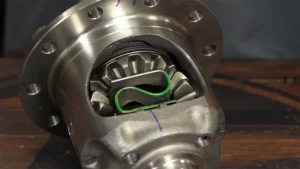
A manual differential lock is a device that allows the driver to physically lock the differential. In normal driving, the differential lets each wheel rotate at different speeds, which is necessary for smooth cornering. However, this also means that when one wheel loses traction, power is wasted and the vehicle struggles to move forward.
By engaging the manual diff lock, both wheels on the same axle are forced to rotate at the same speed, delivering equal torque. This ensures that even if one wheel is on mud or ice, the other can still push the vehicle forward.
Engagement is done manually, often by pulling a lever, twisting a knob, or operating a cable system. The design is simple, mechanical, and highly reliable.
Benefits of Manual Diff Locks
- Direct Driver Control – The driver decides exactly when to engage or disengage.
- Mechanical Simplicity – Few electronic or pneumatic parts, making them less prone to failure.
- Durability – Built to handle harsh environments and heavy loads.
- Affordability – Lower purchase and maintenance cost compared to advanced systems.
For decades, these qualities made manual diff locks the standard solution for off-road vehicles and commercial trucks.
Drawbacks of Manual Diff Locks
Despite their reputation, manual diff locks have clear limitations:
- Less Convenient – Engagement takes driver effort and can be slow in unexpected conditions.
- Higher Risk of Misuse – Using them on dry pavement or forgetting to disengage can strain the drivetrain.
- Falling Out of Favor – As technology improves, most drivers prefer systems that are faster and easier to operate.
Manual Diff Lock vs. Other Types of Lockers
What Are Air Lockers and E-Lockers?
- Air Locker: Uses compressed air to engage a locking mechanism inside the differential. A small onboard compressor supplies air through lines, allowing the driver to activate the lock with a dashboard switch.
- Electronic Locker (E-Locker): Uses an electromagnetic or electrically controlled mechanism to lock the differential. It requires only a switch and electrical connection, making it simpler than air-based systems.
Both systems were designed to overcome the drawbacks of manual diff locks by providing quick, reliable engagement at the push of a button.
Why Compare These Systems?
Manual diff locks, air lockers, and e-lockers represent different stages in the evolution of traction control. Manual locks rely purely on mechanics, while air and electronic systems add modern control methods. Comparing them highlights not only their functional differences but also the shift in driver preferences over time.
Comparison Table
| Feature | Manual Diff Lock | Air Locker | Electronic Locker (E-Locker) |
|---|---|---|---|
|
Control |
Lever/cable, mechanical |
Switch-activated via compressed air |
Switch-activated electronically |
|
Complexity |
Very simple |
Requires compressor and air lines |
Relies on electrical wiring |
|
Reliability |
Extremely high in basic form |
Good, but air leaks possible |
Good, but electrical faults possible |
|
Convenience |
Low, must be engaged manually |
High, near-instant activation |
High, near-instant activation |
|
Cost |
Lowest |
Highest (compressor needed) |
Moderate to high |
|
Best Use Cases |
Heavy-duty, budget-conscious |
Extreme off-road performance |
Everyday 4x4 and modern SUVs |
Expanded Analysis
The table shows that each type of locker has its strengths, but convenience is the deciding factor for many drivers today. A manual diff lock offers excellent durability and low cost, but the need to physically engage it makes it less practical in fast-changing terrain.
Air lockers, although more expensive, are extremely popular in the off-road community because they deliver powerful, instant engagement. E-lockers, on the other hand, are increasingly common in factory-equipped vehicles, giving everyday drivers a simple way to gain traction without dealing with compressors or cables.
The Shift Toward Modern Locking Systems
Over the past few decades, driver expectations have changed. Reliability is still important, but ease of use and integration now carry more weight. That’s why air lockers and e-lockers are the go-to solutions for most new vehicles and aftermarket upgrades.
- Convenience: With the flip of a switch, drivers can activate the lock without leaving their seat or planning ahead.
- Faster Reaction: Sudden terrain changes require quick engagement—something manual systems can’t provide as easily.
- Integration: Modern SUVs and trucks are increasingly designed around electronic control systems, making e-lockers a natural fit.
- Safety: Reduces the chance of misuse compared to manual locks, lowering the risk of drivetrain damage.
Locker Popularity Through the Years
- Manual Diff Locks – Common from the mid-20th century, especially in work trucks and early 4x4s. They were valued for toughness and low cost.
- Air Lockers – Gained momentum in the 1980s and 1990s, especially among serious off-road enthusiasts who wanted maximum control in extreme conditions.
- Electronic Lockers – Became more widespread in the 2000s as manufacturers began offering them in production vehicles. Today, many SUVs and pickup trucks come standard or optional with e-lockers.
This progression shows how technology has steadily moved from pure mechanical simplicity to greater convenience and integration.
Which Locker Is Best for Today’s Drivers?
- Air Lockers: The top choice for serious off-road adventurers who demand instant, rugged performance in extreme environments.
- E-Lockers: The most practical option for everyday drivers and modern vehicles, offering seamless operation at the touch of a button.
Manual diff locks still serve a purpose, particularly for budget-conscious owners or vehicles built for industrial work. But for most drivers, the balance of performance, convenience, and integration makes air and electronic lockers the smarter choice.
Conclusion
The manual diff lock has earned its reputation as a durable and affordable solution for traction control. However, the rise of air lockers and electronic lockers reflects a shift in driver priorities. Convenience, speed, and integration with modern vehicles are now at the forefront.
If you’re considering upgrading your vehicle, air lockers and e-lockers provide superior performance for most applications. Manual systems may still have their place, but the majority of drivers benefit more from the precision and ease of modern lockers.
At xjx parts, we supply a wide range of differential lockers—including manual diff locks, air lockers, and e-lockers—backed by reliable quality and professional service. Whether you’re upgrading a 4×4 or managing a fleet, our team can help you find the right solution. Contact us today to get high-quality products and dependable support.