When it comes to drivetrain upgrades, few components influence traction and vehicle capability as much as the differential. Among all available options, two stand out for performance and utility: the locking differential and the limited slip differential (LSD).
Both are designed to solve a fundamental limitation of open differentials—loss of traction when one wheel slips. However, they achieve this in fundamentally different ways, leading to distinct behaviors on-road and off-road.
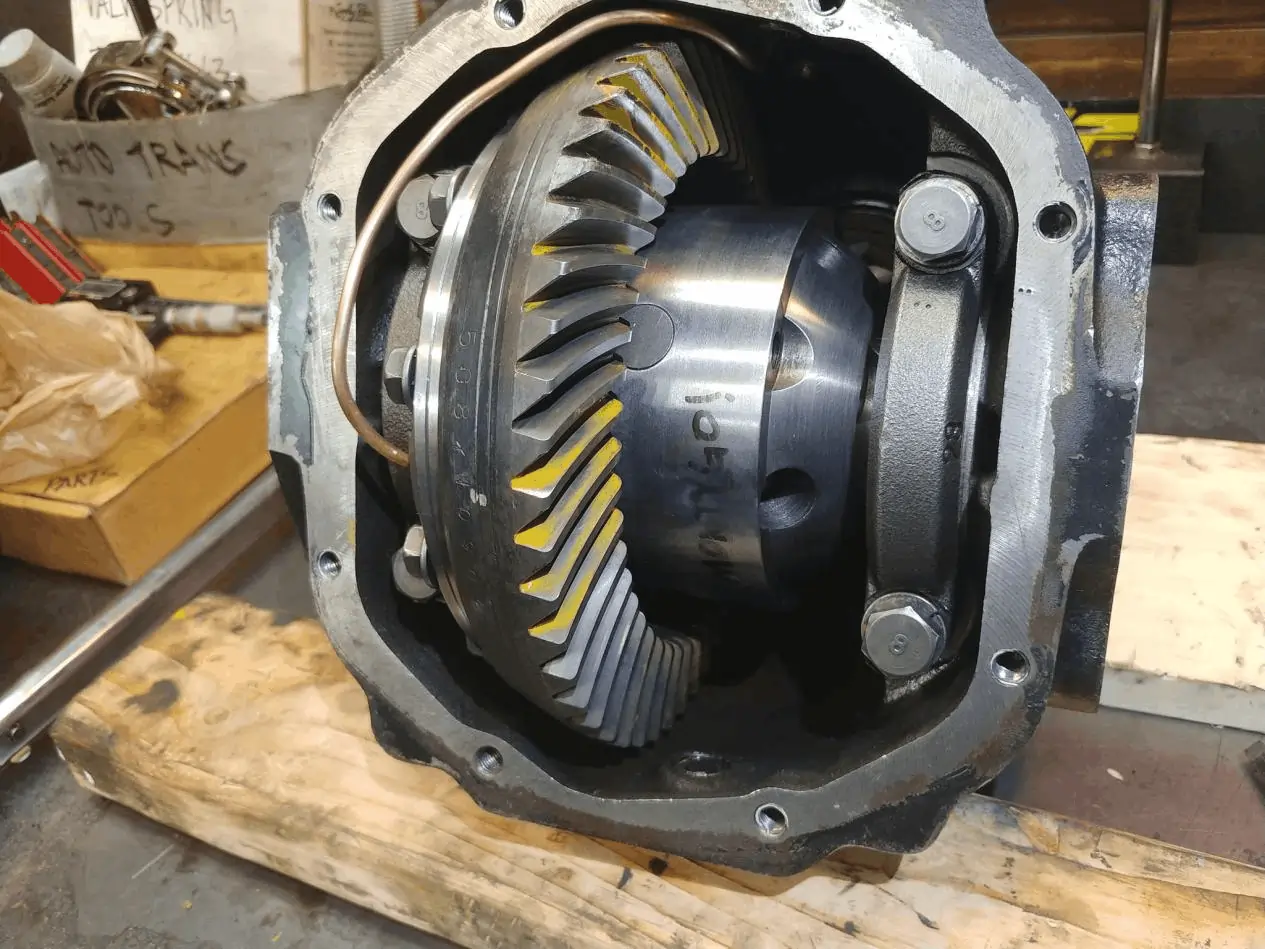
Understanding these differences is essential, especially if you're sourcing components for performance vehicles, off-road builds, or commercial applications.
Understanding the Role of a Differential
Before comparing locking and limited slip systems, it’s important to establish what a differential actually does.
A differential distributes engine torque to the wheels while allowing them to rotate at different speeds. This is critical during cornering, where the outer wheel travels a longer distance than the inner wheel.
However, a standard (open) differential has a major drawback: when one wheel loses traction, most of the torque is sent to that slipping wheel, leaving the other wheel with little usable power.
This is where traction-enhancing differentials—LSDs and lockers—come into play.
What Is a Limited Slip Differential (LSD)?
A limited slip differential is designed to limit the speed difference between the two wheels, while still allowing some variation for smooth handling.
Instead of fully locking both wheels together, an LSD redistributes torque to the wheel with better traction using internal mechanisms such as clutch packs, helical gears, or viscous fluids.
Key Characteristics of LSD
- Allows controlled slip between wheels
- Transfers torque to the wheel with more grip
- Maintains smooth cornering behavior
- Works automatically without driver input
In practical terms, an LSD operates in the middle ground between a fully open differential and a fully locked system. It improves traction without sacrificing drivability.
Advantages of LSD
- Better stability in wet, snow, or mixed conditions
- Smooth and predictable handling
- Minimal impact on tire wear
- Suitable for daily driving and performance use
Limitations of LSD
- Cannot achieve full lock
- May still allow wheel spin in extreme conditions
- Clutch-type LSDs require maintenance over time
What Is a Locking Differential?
A locking differential, often called a “locker,” takes a more aggressive approach.
It mechanically locks both wheels on the same axle together, forcing them to rotate at the exact same speed regardless of traction differences.
This ensures that even if one wheel is completely off the ground or on a slippery surface, the other wheel still receives full torque.
Types of Lockers
- Automatic lockers – engage when slip is detected
- Selectable lockers – activated manually (air, electric, or cable)
- Mechanical lockers – always engaged or purely gear-driven
Advantages of Locking Differentials
- Maximum traction in extreme conditions
- Ideal for off-road, rock crawling, mud, and sand
- Highly durable and mechanically robust
Limitations of Locking Differentials
- Reduced maneuverability on paved roads
- Increased tire wear due to forced wheel synchronization
- Potential drivetrain stress and noise
- Can negatively affect handling in snow or ice
As many experts point out, lockers essentially turn your axle into a solid unit when engaged, which is highly effective off-road but less suitable for daily driving.
Core Differences: LSD vs Locking Differential
At a technical level, the difference comes down to how torque is distributed and how wheel speed is managed.
1. Torque Distribution
- LSD: Biases torque toward the wheel with grip
- Locker: Sends equal torque to both wheels, always
2. Wheel Speed Behavior
- LSD: Allows controlled speed difference
- Locker: Eliminates speed difference entirely
3. Driving Experience
- LSD: Smooth, predictable, road-friendly
- Locker: Aggressive, sometimes harsh on pavement
4. Traction Capability
- LSD: Moderate to high
- Locker: Maximum possible traction
5. Application Focus
- LSD: Street + performance + light off-road
- Locker: Extreme off-road + heavy-duty use