Among all types of mechanical limited-slip differentials, the Torsen (Torque-Sensing) differential is one of the most widely discussed designs. It doesn’t rely on clutch plates or electronic control; instead, it uses a purely gear-driven mechanism to manage torque. But is a Torsen differential truly better?

The honest answer is: in most real-world driving situations, it performs exceptionally well — but in specific extreme scenarios, it is not the ideal choice.
To help you understand this clearly, we will evaluate it from the perspectives of structure, driving behavior, durability, and application suitability.
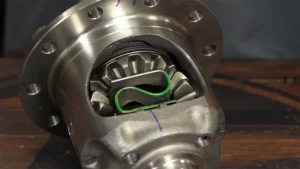
Inside a Torsen differential, you’ll find worm gears and worm wheels arranged in a special configuration. Unlike plate-type LSDs that generate locking force through friction plates, a Torsen creates torque bias through the internal resistance of its gear mesh.
This gives the Torsen two major characteristics:
First, its response is immediate. It starts working as soon as torque enters the differential. It does not require wheel slip to activate.
Second, its behavior is very smooth.
There’s no sudden lock-up, no chattering, and no harsh engagement. Most drivers won’t even notice the moment it begins transferring torque because everything happens gradually and naturally.
Because of this, a Torsen differential feels very “transparent” in daily driving — unlike a high-preload clutch LSD that may cause noise or tight turning at low speeds.
How a Torsen Affects Vehicle?
On paved roads, highways, winding mountain routes, or wet surfaces, the Torsen’s strengths become obvious. Its torque distribution is progressive rather than abrupt, allowing the car to remain more stable and predictable through corners or during acceleration.
For example, when accelerating out of a turn, the outer wheel typically has more grip. A Torsen automatically sends more torque to that wheel, reducing wheelspin and helping the car maintain its intended line.
For example, when accelerating out of a turn, the outer wheel typically has more grip. A Torsen automatically sends more torque to that wheel, reducing wheelspin and helping the car maintain its intended line. In simple terms, a Torsen enhances stability and control without disturbing the driving experience.
Torsen is Built to Last
Because there are no clutch plates, preload springs, or wear-based friction components inside a Torsen, its lifespan is typically very long. As long as the differential oil is maintained, its performance remains consistent over time. By contrast, clutch-type LSDs gradually lose performance due to:
- plate wear
- reduced preload
- friction degradation
- increased noise or chattering
This is why many OEM manufacturers — including Audi, Toyota, Jeep, and Ford — have used Torsen units extensively in their platforms. For commercial vehicles, long-distance travelers, or pickup trucks, the reliability and low maintenance of a Torsen differential are major advantages.
Torsen is Not a Full Locker
Despite its strong performance on road surfaces, a Torsen does have a clear limitation.
If one wheel becomes completely unloaded or loses all traction, a Torsen cannot transfer torque because its mechanism depends on a certain level of resistance on both sides.
This situation can occur during heavy off-roading, deep articulation, or when a wheel is hanging in the air.
This situation can occur during heavy off-roading, deep articulation, or when a wheel is hanging in the air.
This does not mean Torsen is unsuitable for off-road use. In fact, many modern off-road vehicles combine Torsen + electronic brake control, using the brakes to artificially add resistance to the spinning wheel so the Torsen can start working again.
However, for extreme terrain, rock crawling, or situations requiring 100% lock, a mechanical locker or electronic locker is more appropriate.
So, the Torsen is excellent for “challenging roads,” but not ideal for “extreme terrain.”
Is a Torsen Differential Better?
If your driving includes:
- everyday streets
- mountain roads
- wet or slippery conditions
- mixed city/highway use
- light off-road or unpaved terrain
then a Torsen differential is arguably one of the best mechanical LSDs you can choose.
It provides stronger traction, smoother handling, long-term reliability, and very low maintenance — without the harshness or wear issues associated with clutch-type systems.
However, if your vehicle needs:
- full locking capability
- consistent performance during wheel lift
- tunable characteristics for motorsports
- or extreme off-road durability
then a locking differential or a high-preload clutch LSD will be a better fit.
Conclusion
A Torsen differential is not “universally better,” but it offers one of the most balanced combinations of performance, comfort, and durability for real-world driving. It works naturally and smoothly, enhances stability, and provides reliable traction across a wide range of conditions.
Its strength lies in smooth torque transfer and long-term consistency;
its limitation lies in extreme off-road situations where a wheel may be fully unloaded.
At XJXPARTS, we are a direct factory specializing in gear-type limited-slip differentials, Torsen mechanisms, differential locks, and ring & pinion gear sets. With years of engineering experience and strong manufacturing capabilities, we supply high-quality drivetrain components for performance upgrades, 4×4 vehicles, commercial applications, and OEM projects.
Contact XJXPARTS today and work directly with the manufacturer.