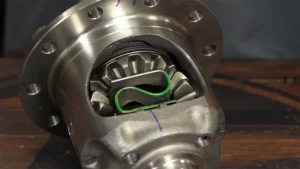
What is the Meaning of a Limited Slip Differential?
The primary goal of an LSD is to ensure that engine power is sent to the wheel with the most grip. In a high-performance or off-road scenario, if one wheel loses contact with the ground or hits a patch of ice, a standard differential would send all the power to that slipping wheel. An LSD prevents this by mechanically linking the two wheels when a slip is detected, forcing power to the wheel that actually has the traction to move the vehicle forward.
Why Do You Need a Differential in the First Place?
The Downside of the Open Differential
How Does a Limited Slip Differential Work?
The “meaning” of an LSD is best understood through its mechanical function. While there are several designs, they all rely on a common principle: creating internal friction or mechanical resistance to prevent one wheel from spinning significantly faster than the other.
When the system senses a large delta in wheel speed, the internal components (clutches, gears, or fluid) engage to “lock” the two sides of the axle together to a certain degree. This ensures that even if one wheel is on a slippery surface, a significant percentage of the engine’s torque is redirected to the wheel with better grip.
The Different Types of Limited Slip Differentials
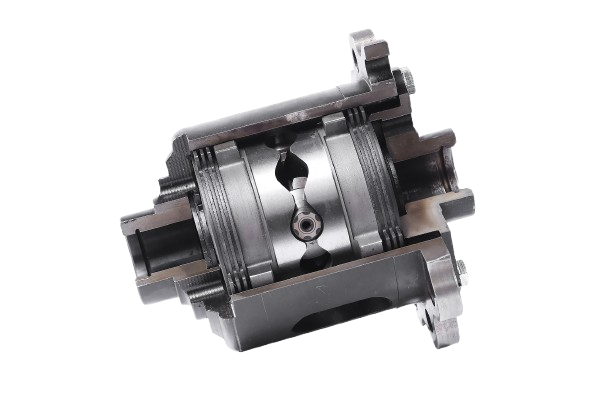
1. Clutch-Type LSD
This is perhaps the most traditional form of Limited Slip Differential. It uses a series of friction plates (clutches) and steel discs.
- How it works: Under normal conditions, the clutches allow for some slip. However, when one wheel begins to spin faster than the other, the internal pressure (often caused by the movement of spider gears on a cross-shaft) compresses the clutch pack.
- Performance: This creates a mechanical link between the two wheels. Clutch-type LSDs are highly predictable and are a favorite for drifting and track racing because the “lock-up” can be tuned by changing the clutch stack or the ramp angles within the housing.
- Pros: Highly effective for high-torque applications; rebuildable and customizable lock-up characteristics; excellent for drifting and track use.
- Cons: The clutch plates eventually wear out and require replacement; they often require specific friction-modifier additives in the gear oil; can produce “chatter” or noise during tight, low-speed turns.
2. Torsen (Geared) LSD
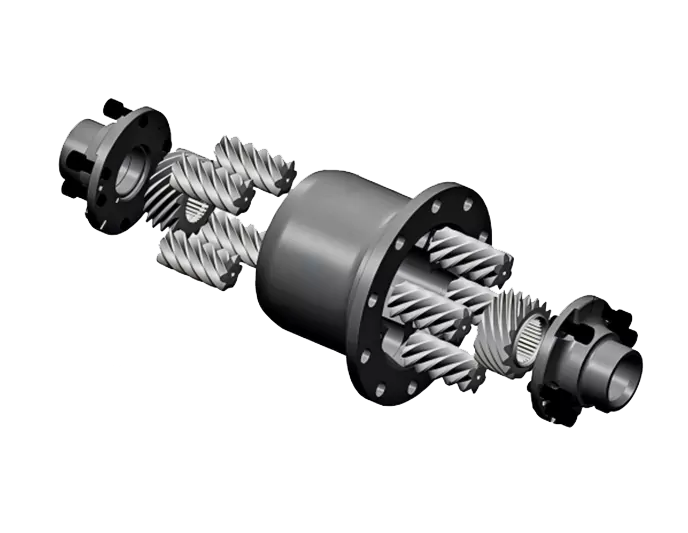
“Torsen” is a portmanteau of Torque Sensing. This design is purely mechanical and relies on the principles of worm gears rather than friction plates.
- How it works: Gears are incredible because they rely on physics rather than wear items. A Torsen differential acts like an open differential until it detects a torque imbalance. The complex geometry of the gears prevents one wheel from spinning wildly while still allowing the smooth speed variations required for everyday street driving.
- Performance: These are favored for their seamless operation. Because there are no clutches to engage or disengage, the transition of power feels completely natural to the driver.
- Pros: Currently the most recommended and mainstream type of LSD on the market; virtually maintenance-free; lasts the lifetime of the vehicle; no special oil additives required; provides instantaneous torque transfer.
- Cons: If one wheel is completely off the ground (zero traction), some Torsen units may act like an open differential; heavier and more complex to manufacture than clutch units.
3. Viscous LSD (VLSD)
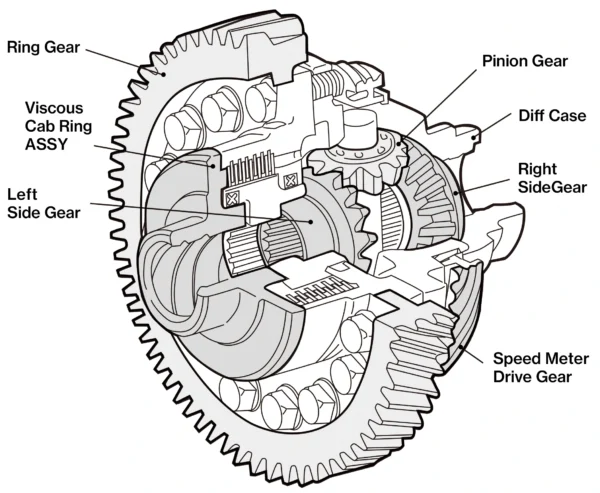
Commonly found in factory sports cars from the 1990s and 2000s, the VLSD uses a thick, speed-sensitive silicone fluid to manage traction.
- How it works: As one wheel spins faster, it “shears” the silicone fluid inside a sealed chamber. This shearing action generates heat, causing the fluid to thicken and expand, which then exerts force on internal plates to link the two axles together.
- Performance: The engagement is very soft and smooth, making it ideal for standard passenger vehicles and light sports cars.
- Pros: Very inexpensive to manufacture; extremely smooth engagement with no noise or vibration; simple design.
- Cons: There is a slight delay while the fluid heats up; not suitable for heavy-duty towing or rock crawling; the silicone fluid breaks down over time, eventually turning the unit into a standard open differential.
Comparison of LSD Types
| Feature | Clutch-Type LSD | Torsen (Geared) | Viscous (VLSD) |
|---|---|---|---|
|
Primary Use |
Racing, Drifting, Track |
Performance Street, SUVs |
Daily Driving, Light Sports |
|
Durability |
High (but needs rebuilds) |
Extremely High |
Moderate (fluid degrades) |
|
Engagement |
Aggressive / Immediate |
Immediate / Seamless |
Delayed / Smooth |
|
Maintenance |
Regular fluid + Additive |
Standard gear oil changes |
None (non-serviceable) |
|
Best For |
Maximum Control |
Longevity & Street Performance |
Comfort & Cost-Effectiveness |
Limited Slip Differential vs. Locking Differential (E-Locker)
| Feature | Limited Slip Differential (LSD) | Locking Differential (Locker) |
|---|---|---|
|
Operation |
Automatic and progressive. |
On/Off (Manual or Automatic). |
|
Street Use |
Excellent; very smooth in corners. |
Can be "chirpy" or harsh in turns. |
|
Off-Road |
Great for mud, sand, and light trails. |
Best for extreme rock crawling. |
|
Wheel Speed |
Allows for slight speed differences. |
Forces wheels to spin at 100% same speed. |
The Benefits of Installing an LSD
Improved Cornering and Handling
Safety in Adverse Weather
On roads covered in rain, slush, or light snow, an LSD provides a massive safety margin. By preventing a single wheel from spinning up, the vehicle maintains better directional stability. It reduces the chance of the car “fishtailing” or losing control when one side of the car hits a puddle.
Enhanced Off-Road Capability
For the weekend warrior or the overlanding enthusiast, an LSD is a game-changer. It allows you to maintain momentum over uneven terrain without the mechanical harshness of a full locker. It is the perfect middle ground for those who spend 80% of their time on the road and 20% on the trails.
Maintenance and Longevity
Conclusion
Selecting the right differential requires a balance of engineering precision and high-quality manufacturing. At XJXPARTS, we specialize in producing professional-grade LSDs and E-Lockers in our dedicated factory. For reliable performance and factory-direct expertise, feel free to contact us today to discuss your specific drivetrain needs.