If you’re shopping for a rear differential locker, you’ve probably come across two terms: OEM and aftermarket. At first glance, the difference seems simple. One comes from the original vehicle manufacturer, while the other comes from an independent parts supplier.
But there’s a little more to it than that.
We’ve seen buyers assume that OEM automatically means better quality, or that aftermarket lockers are only for heavily modified off-road vehicles. Neither is necessarily true. The right choice depends on what you’re driving, what you expect from the locker, and whether you’re replacing an existing unit or upgrading your vehicle.
Let’s look at what actually matters when choosing between an OEM and aftermarket differential locker.
What Does OEM Mean for a Differential Locker?
OEM stands for Original Equipment Manufacturer. When people talk about an OEM differential locker, they’re usually referring to a locker supplied as part of the vehicle’s original equipment or through its authorized parts network.
Take the Toyota Land Cruiser 79 Series as an example. Depending on the model year and specification, some vehicles come with factory-installed differential locks. If one of those lockers needs replacing, the owner may prefer a genuine factory replacement to keep the original system and controls.
That’s one of the biggest advantages of OEM parts. They’re designed for a particular factory configuration, so there’s less uncertainty about how the replacement should fit and operate when the correct part is selected.
The downside? Original parts can be expensive, and availability isn’t always great, especially for older vehicles.
There’s also something worth clearing up. In the automotive parts business, OEM can refer to manufacturing services. A factory might produce differential lockers for another company’s brand under an OEM agreement. That doesn’t necessarily mean those lockers are genuine Toyota, Nissan, or Mitsubishi parts.
It’s an important distinction, particularly when you’re sourcing products from manufacturers rather than buying through a dealership.
What Is an Aftermarket Differential Locker?
An aftermarket differential locker is made for the replacement or modification market rather than supplied through the vehicle manufacturer’s original parts channel.
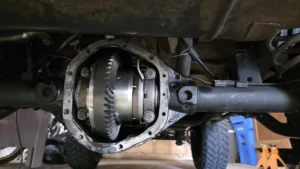
For example, imagine you own a Toyota Hilux with an open rear differential. The truck performs well on the road, but you regularly drive through muddy tracks or rocky trails. Once a rear wheel loses traction, getting through certain obstacles can become difficult.
Instead of changing the entire axle assembly, you may be able to install a compatible aftermarket rear differential locker.
With a selectable locker engaged, both axle shafts rotate at the same speed. That can make a noticeable difference when one wheel is on slippery ground or lifted off the surface.
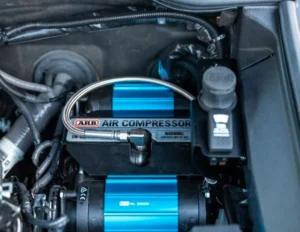
Brands such as ARB and Eaton offer aftermarket locking differential solutions, and there are also manufacturers supplying electric lockers for different 4×4 applications.
The main attraction of aftermarket products is choice. You’re not limited to the locking system originally offered with the vehicle. Depending on the axle, you may have electric, air-operated, or other locking options.
Of course, not every aftermarket locker is the same. Manufacturing quality, internal design, material selection, and installation accuracy all matter.
OEM vs Aftermarket Differential Locker
The biggest difference isn’t necessarily how the locker works. It’s where the product comes from and what it was designed to do.
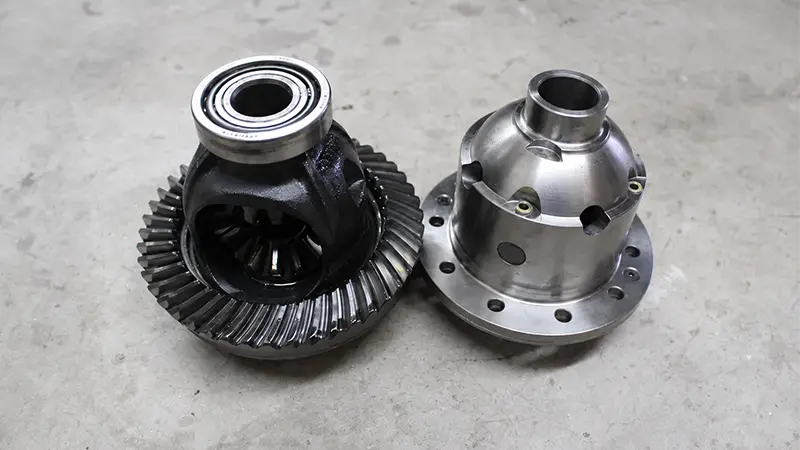
An OEM differential locker is generally intended to match a specific original vehicle configuration. An aftermarket locker may be designed as a replacement, an upgrade, or a completely new locking solution for a vehicle that didn’t originally have one.
Here’s a straightforward comparison:
| Feature | Feature OEM Differential Locker | Aftermarket Differential Locker |
|---|---|---|
|
Product source |
Original equipment supply chain |
Independent parts manufacturers |
|
Main application |
Factory equipment replacement |
Replacement or off-road upgrade |
|
Fitment |
Specific original configuration |
Depends on axle and product design |
|
Available types |
Original factory system |
Electric, air, or automatic |
|
Price |
Often more expensive |
Wider range of prices |
|
Customization |
Usually limited |
OEM/ODM options may be available |
|
Installation |
Usually follows factory specifications |
May require additional components |
For someone replacing a failed factory locker, staying with an OEM unit can make sense.
But if the vehicle never had a locker, or the owner wants a different type of locking system, aftermarket options are often worth considering.
Neither choice is automatically better. It comes down to the application.
Do You Really Need a Rear Differential Locker?
Not every 4×4 needs a differential locker.
If your vehicle spends nearly all its time on paved roads, the original differential may already be sufficient.
But things change when you start driving on uneven terrain.
Imagine climbing a rocky trail. One rear wheel is firmly planted, while the other starts to lift. With an open differential, the lifted wheel may spin without allowing enough torque to reach the wheel that still has traction.
A locked differential helps solve that problem by forcing both axle shafts to rotate together.
That doesn’t mean a locker will get you through every obstacle. Tires, ground clearance, suspension travel, and driver technique still matter.
It’s also worth remembering that a selectable locker should normally be disengaged during regular paved-road driving. Locking the differential while turning on high-traction surfaces can place unnecessary stress on drivetrain components and affect handling.
A locker is a tool for situations where you need additional traction, not something that should remain engaged all the time.
Final Thoughts
If your goal is to restore a vehicle to its original factory configuration, a genuine OEM differential locker may be the simplest choice.
If you’re looking to add locking capability, improve off-road traction, or explore different locking systems, an aftermarket differential locker gives you more options.
For distributors and parts brands, aftermarket manufacturers offering OEM/ODM services can also be worth considering, especially when you need custom branding or a consistent supply of products.
The important thing is not to choose based on the words OEM or aftermarket alone.
Start with the vehicle’s actual differential specifications, decide what you need the locker to do, and then look for a product and supplier that can meet those requirements.
Looking for electric differential lockers for your 4×4 parts business?
We work with automotive parts buyers looking for differential locking solutions and manufacturing cooperation. If you have a vehicle application, axle specification, or OEM/ODM project in mind, feel free to contact us to discuss your requirements.