Note: XJXParts is not related to any product or model code such as ‘xjx-400’, ‘xjx-212’, or other similar terms. Our focus is exclusively on differential and drivetrain technology.

Do You Need an E-Locker Differential?

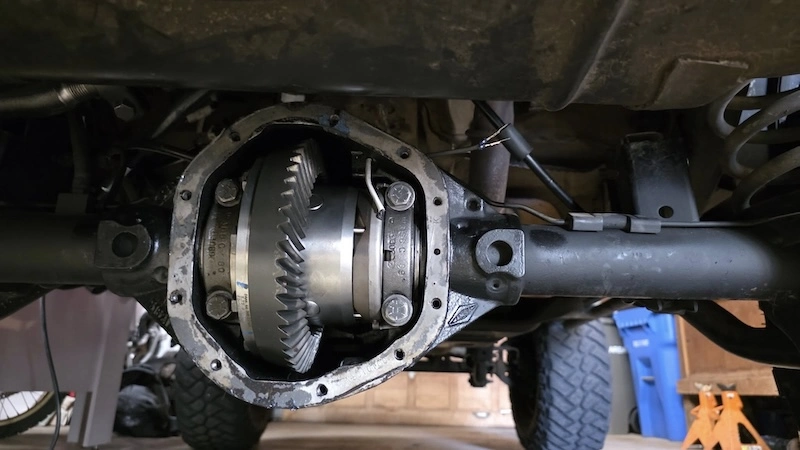
For many drivers exploring off-road capability, the idea of upgrading to a locking differential—especially an electronic locking differential (E-locker)—comes up quickly. It’s often described as a must-have feature for serious terrain, yet many vehicles perform perfectly well without one.

So the real question is not simply what an E-locker is, but whether you actually need one for your specific use case. Understanding how locking differentials work, when they make a difference, and what your options are—both from the factory and aftermarket—will help you make a more informed decision.
do-you-need-an-e-locker-differential

What Does a Locking Differential Actually Do?

A standard open differential is designed to allow the left and right wheels to rotate at different speeds, which is essential for smooth cornering on paved roads. However, this design has a critical limitation: power is always sent to the wheel with the least resistance.
In low-traction conditions—such as mud, snow, or uneven terrain—this means one wheel can spin freely while the other receives little to no torque.
A locking differential solves this problem by forcing both wheels on the same axle to rotate at the same speed. When engaged, it ensures that torque is distributed evenly, allowing the vehicle to maintain traction even if one wheel loses contact with the ground.

This is why locking differentials are particularly valuable in off-road scenarios where traction is inconsistent.

Types of Lockers: Automatic vs Manual Lockers

Not all locking differentials operate the same way. The two primary categories are automatic lockers and selectable lockers.

Automatic Lockers

Automatic lockers engage without driver input when certain conditions are met. They are mechanically simple and typically more affordable, making them a popular choice for dedicated off-road builds.
However, their behavior on paved roads can be less predictable. Drivers may notice increased noise, tire wear, or handling quirks during normal driving.

Manual Lockers (E-Lockers)

Selectable lockers, including electronic locking differentials (E-lockers), allow the driver to decide when the differential should lock. This provides a clear advantage: normal driving characteristics are preserved until additional traction is needed.
E-lockers are widely regarded as the most versatile solution for vehicles that serve both daily driving and off-road purposes. The trade-off is higher cost and greater system complexity.
In practical terms, selectable lockers offer better control, while automatic lockers prioritize simplicity.
Locking differentials are generally divided into automatic and selectable types. While this article focuses on practical decision-making, a more detailed comparison of how these systems operate and perform in different conditions can be found here:

Auto vs. Manual Lockers

Not sure if you need an E-locker? Discover how locking differentials work, when they matter, and how to choose the right setup for your vehicle.

When Do You Actually Need an E-Locker?

The value of an E-locker depends entirely on how the vehicle is used.

Situations Where an E-Locker Makes a Real Difference

An E-locker becomes highly beneficial in environments where traction is uneven or unpredictable. This includes:
  • Rock crawling, where wheels frequently lift off the ground
  • Deep mud or sand, where one wheel can easily lose grip
  • Steep or technical trails requiring controlled torque delivery
In these conditions, the ability to manually engage a locker ensures consistent traction and reduces the likelihood of getting stuck.

Situations Where It May Be Unnecessary

For many drivers, especially those who spend most of their time on paved roads or light trails, an E-locker may offer limited real-world benefit.
Modern traction control systems, combined with all-wheel drive or four-wheel drive systems, are often sufficient for:
  • Gravel roads
  • Light off-road use
  • Occasional snow or wet conditions

In these cases, the additional cost of a locking differential may not translate into meaningful performance gains.

Best Vehicles That Come with Factory E-Lockers

While E-lockers are often associated with aftermarket upgrades, several vehicles are equipped with them directly from the factory—primarily those designed with off-road performance in mind.

Pickup Trucks with Factory E-Lockers

Models such as the Toyota Tacoma TRD Off-Road and Ford F-150 FX4 offer rear electronic locking differentials either as standard equipment or optional packages. These trucks are engineered to handle moderate off-road conditions while maintaining everyday usability.

Similarly, trims like the Ram 1500 Rebel provide factory-installed locking differentials tailored for drivers who need a balance between work, daily driving, and off-road capability.

SUVs with Factory E-Lockers

In the SUV segment, off-road-focused models are more likely to include factory lockers. The Toyota 4Runner TRD Pro is a well-known example, offering a rear locking differential designed for trail use without compromising reliability.

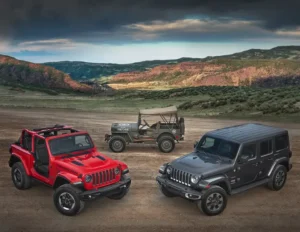
More specialized vehicles like the Jeep Wrangler Rubicon and the Ford Bronco go further by offering both front and rear locking differentials. This dual-locking configuration is particularly effective in extreme off-road scenarios where maximum traction is required.

What This Means for Buyers

Factory E-lockers are typically limited to specific trims or off-road packages, and not all vehicles offer them as standard equipment. However, this does not mean that vehicles without factory lockers are unsuitable for off-road use.
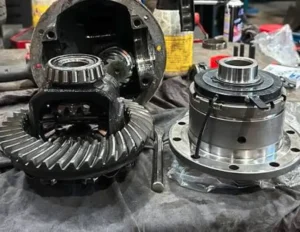
Many drivers choose to install aftermarket locking differentials based on their specific needs. This approach allows for greater flexibility, including the ability to upgrade gear ratios or tailor drivetrain performance.
Ultimately, the presence of a factory E-locker should be viewed as a convenience rather than a strict requirement. The right choice depends on how the vehicle will actually be used.

Factory E-Locker vs Aftermarket Locker

Choosing between a factory-installed E-locker and an aftermarket solution depends on priorities such as cost, customization, and intended use.
Factory systems offer seamless integration, consistent reliability, and no need for additional installation. They are designed to work within the vehicle’s original drivetrain parameters, making them a straightforward option for most users.
Aftermarket lockers, on the other hand, provide greater flexibility. They can be installed on a wider range of vehicles and often allow for additional upgrades, such as changes in gear ratios or reinforcement of drivetrain components.
For drivers building a dedicated off-road vehicle, aftermarket solutions can offer significant advantages. For those seeking convenience and reliability with minimal effort, factory options are often sufficient.

Key Differences: Factory vs Aftermarket Lockers

Factor Factory E-Locker Aftermarket Locker
Installation
Pre-installed by manufacturer
Requires professional installation
Cost Structure
Higher upfront (included in vehicle price)
Flexible, depends on components and labor
Reliability
OEM-tested and calibrated
Varies by brand and installation quality
Compatibility
Designed for specific vehicle models
Can be adapted to a wide range of vehicles
Customization
Limited options
High flexibility (gear ratio, strength, setup)
Control Type
Typically electronic (driver-controlled)
Mechanical, air, or electronic options available
Best For
Daily drivers with occasional off-road use
Dedicated builds or performance-focused upgrades

This comparison highlights a key point: factory E-lockers prioritize convenience and integration, while aftermarket solutions offer greater flexibility for tailored performance. The right choice depends less on availability and more on how the vehicle is expected to perform in real-world conditions.

How to Decide Based on Your Driving Needs

Rather than focusing solely on whether a vehicle has a factory E-locker, it is more effective to evaluate your actual driving conditions.
  • If your driving involves extreme off-road terrain, a locking differential—preferably selectable—becomes highly valuable
  • If your use is mixed, an E-locker provides flexibility without compromising daily comfort
  • If your driving is primarily on-road with occasional light off-road use, a locker may not be necessary

This decision framework helps avoid unnecessary upgrades while ensuring that essential capabilities are not overlooked.

Final Verdict: Is an E-Locker Worth It?

An E-locker is not a universal requirement, but it is a powerful tool when used in the right context.
For serious off-road enthusiasts, it can significantly improve traction and control. For everyday drivers, it may remain unused most of the time.

The key is to align the capability with actual usage. Investing in an E-locker makes sense when the conditions demand it—not simply because it is available.

FAQ

Do all 4×4 vehicles have locking differentials?
No. Many 4×4 vehicles rely on traction control systems instead of mechanical lockers.

Is an E-locker better than a limited-slip differential?
An E-locker provides full lock when engaged, while an LSD only limits slip. Each serves different purposes.

Can you install a locker later?
Yes. Aftermarket lockers can be installed on many vehicles, often with additional customization options.

Is a rear locker enough?
For most users, a rear locker provides significant traction improvement. Dual lockers are typically only necessary for extreme conditions.

For drivers and builders looking to upgrade drivetrain components or explore aftermarket locking solutions, working directly with a manufacturing source can provide more flexibility. XJXPARTS specializes in differential components and gear systems—learn more or get in touch at: https://www.xjxparts.com/contact-us/
Don’t Stop Here

More To Explore

locking-differential-vs-limited-slip

Locking Differential vs Limited Slip

When it comes to drivetrain upgrades, few components influence traction and vehicle capability as much as the differential. Among all available options, two stand out

download catalog now!