Understanding What a Differential Does
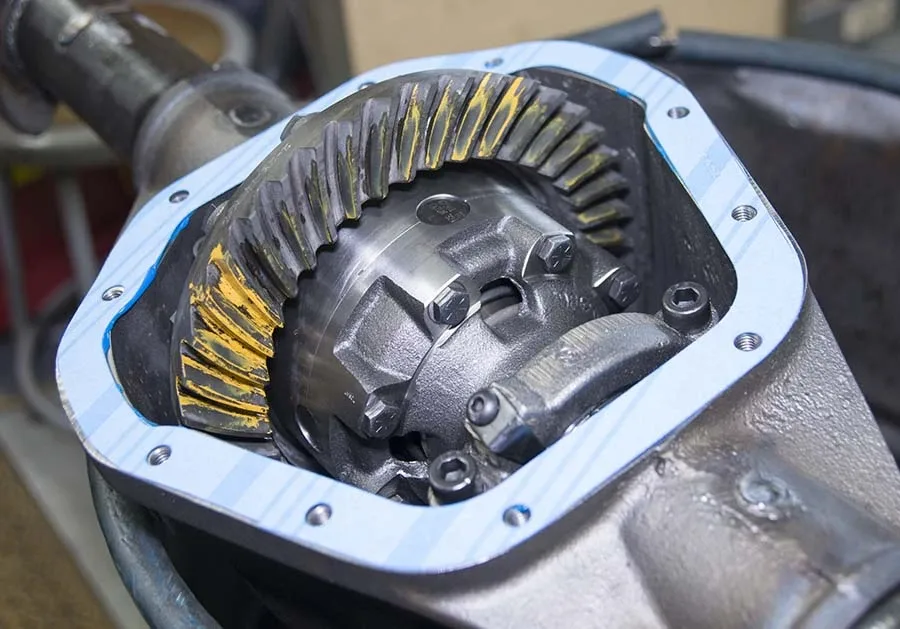
To appreciate why locking differentials exist, it’s important to understand what a differential actually does. In a typical drivetrain, the differential allows the left and right wheels on an axle to rotate at different speeds. This is crucial when turning—since the inner wheel travels a shorter path than the outer wheel, it must spin more slowly. Without a differential, cornering would be harsh, tires would scrub, and components would wear quickly.
However, this same mechanism becomes a disadvantage off-road. When one wheel loses traction—say, it’s on loose gravel, mud, or lifted off the ground—the open differential sends most of the engine’s power to the wheel with the least resistance. The result is wheelspin on one side and no movement at all on the other. That’s where locking differentials come in.
What Is a Locking Differential?
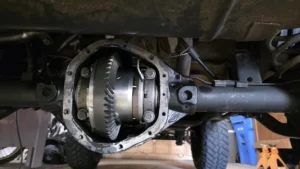
A locking differential eliminates that slip by mechanically locking both wheels on an axle together, forcing them to rotate at the same speed. This means that even if one wheel is in the air, the other wheel still receives power. Lockers can be engaged manually (via switches or levers) or automatically, depending on the vehicle’s design.
There are several types of locking differentials commonly used in 4×4 systems:
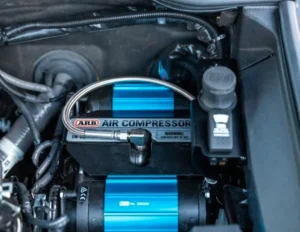
- Air lockers, which use compressed air to engage the locking mechanism.
- Electronic lockers (E-lockers), which use an electric actuator to connect both axles.
- Mechanical lockers, which engage automatically through internal mechanisms like ratchets or cams.
Each type has its own pros and cons, but the fundamental purpose remains the same: maintain traction when one or more wheels lose contact with the ground.
Why Lockers Matter: The Off-Road Example
To illustrate how lockers affect performance, consider two very different off-road vehicles: the Ineos Grenadier, a rugged, mechanically focused SUV equipped with front, rear, and center locking differentials, and the Toyota Land Cruiser, a more refined SUV that relies primarily on advanced traction control systems.
The Grenadier’s setup represents a traditional, mechanical approach. It has solid front and rear axles, low-range gearing, and optional diff locks on both ends. This design provides maximum control but requires the driver to know when and how to engage each system.
The Land Cruiser, by contrast, uses independent front suspension and electronic aids such as traction control, stability systems, and brake-based torque vectoring. It only includes a center differential lock—the front and rear axles remain open—but the onboard computer compensates for slip by applying brake pressure to spinning wheels and redirecting torque to the ones with grip.
Both vehicles are capable off-road, but their philosophies are different. Let’s examine how that plays out in practice.
The Open Differential Scenario
Imagine driving the Grenadier up a steep, uneven hill with open differentials and no traction aids. The first attempt feels hopeless—one wheel spins wildly while the other stands still. The engine revs, but the vehicle barely moves. This is the classic limitation of open diffs: the power flows to the path of least resistance.
Without intervention, the driver risks overheating the transmission and tires from unnecessary wheelspin. The solution? Engage low range and start locking differentials one by one.
Locking in Traction: Step by Step
When the driver engages low range with the center differential unlocked, torque distribution between the front and rear remains uneven, depending on traction. Once the center diff is locked, the power split becomes a fixed 50/50 between the front and rear axles. That’s a major improvement, but if either front or rear wheel loses grip, the power on that axle still escapes through the spinning wheel.
Now the rear differential locker comes into play. With it engaged, both rear wheels spin together—each getting 50% of the rear axle’s torque. This additional push helps the vehicle climb higher. Finally, activating the front locker ensures that all four wheels rotate at identical speeds: 25% of the total torque to each wheel. Even if two wheels lift off the ground, the remaining two can pull the vehicle forward. The difference is dramatic—the once-stuck Grenadier now powers confidently over the obstacle.
The Traction Control Alternative
Next, consider the Land Cruiser on the same hill. Without locking differentials, it seems at a disadvantage—but its traction control system quickly proves otherwise. As soon as one wheel slips, the onboard sensors detect the speed difference and apply the brake to that wheel. This braking action forces torque to transfer to the opposite wheel with grip. The process happens automatically, without any manual input.
In fact, in moderate off-road situations—like climbing loose gravel slopes or crossing sandy patches—modern traction control can outperform mechanical lockers. It distributes torque smoothly, avoids sudden wheel binding, and requires no driver intervention. When combined with low-range gearing and a locked center differential, vehicles like the Land Cruiser can tackle surprisingly tough terrain.
Comparing Performance: Lockers vs. Traction Control
So, which system is better? The answer depends on the type of off-roading you plan to do.
- In loose but relatively level terrain, traction control systems excel. They provide immediate, adaptive torque management that helps maintain momentum without jerky wheel movement. For example, driving on deep sand or slippery gravel often feels smoother and more controlled with electronic traction systems.
- In highly articulated situations, mechanical lockers win. When the suspension is flexed—such as when crossing deep ruts or climbing over rocks—traction control systems struggle. The brakes on spinning wheels may overheat, and power delivery can lag. A properly engaged locker, however, guarantees continuous power to the wheels that still have contact, allowing the vehicle to crawl forward even when one or two wheels are airborne.
Practical Lessons for Off-Road Drivers
From extensive testing across various vehicles—from Wranglers and Broncos to Land Cruisers and Grenadiers—the pattern is clear: locking differentials are invaluable for technical off-roading, but traction control is sufficient for casual trails.
If your adventures mainly involve gravel roads, mild trails, or light overlanding, a vehicle equipped with a smart traction control system and at least a center differential lock will serve you well. These systems automatically handle most slip conditions and make driving easier for beginners.
However, if you often face rocky climbs, uneven ruts, or mud pits where wheel articulation is extreme, mechanical lockers are irreplaceable. They eliminate hesitation and reduce the need for high-speed momentum that could otherwise damage drivetrain components. The feeling of steady, predictable grip from locked diffs is unmatched.
The Role of Driver Skill
It’s also worth noting that lockers demand more driver awareness. Engaging them too early can cause tight turning resistance, tire scrub, or even drivetrain stress. Proper use requires understanding when traction is needed most—usually just before approaching a particularly uneven section. Many experienced off-roaders recommend engaging lockers while stationary or moving very slowly to avoid mechanical strain.
By contrast, traction control systems are automatic. They allow newer drivers to focus more on steering and throttle control rather than drivetrain management. In that sense, electronic aids can make off-roading more accessible without compromising safety.
Conclusion: Choosing What Fits Your Terrain
Locking differentials are not strictly necessary for all off-road driving, but they remain the ultimate tool for extreme conditions. Vehicles like the Ineos Grenadier demonstrate their raw mechanical advantage when traction is scarce and articulation is high. Meanwhile, modern SUVs such as the Toyota Land Cruiser show how intelligent traction control can achieve similar—or sometimes even better—results in mild to moderate terrain.
The key is to match your equipment to your environment. For everyday off-road exploration, advanced traction systems may be all you need. For rugged, technical trails that demand maximum traction, nothing substitutes for a properly engaged locking differential. Understanding how each system works—and when to use it—is what separates casual drivers from confident off-road experts.