What Is a Limited Slip Differential?
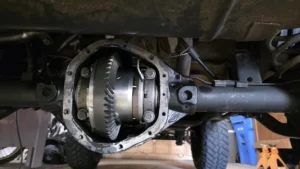
A limited slip differential (LSD) is a device that reduces individual wheel spin and improves traction by redistributing torque to the wheel with the most grip. Unlike a standard open differential that always sends power along the path of least resistance, an LSD senses when one wheel loses traction and mechanically or hydraulically transfers drive force to the opposite wheel that can actually use it.
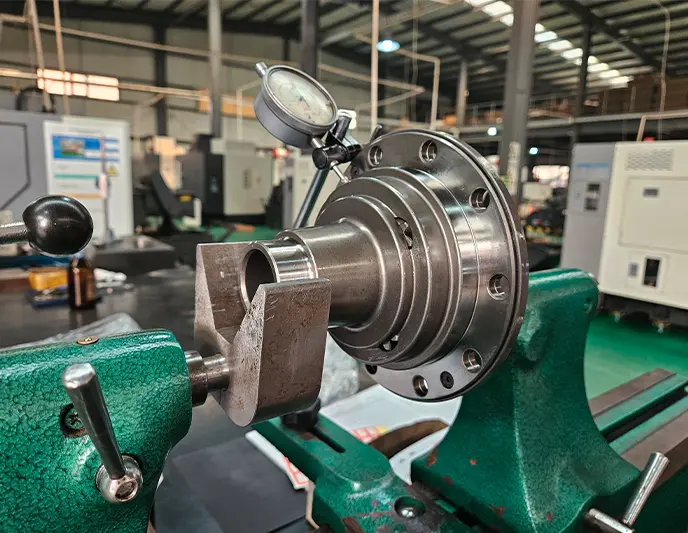
First developed in 1935 to minimise excessive wheel spin in Grand Prix racing cars, LSDs have since become a staple component in performance vehicles, off-road trucks, muscle cars, and increasingly in everyday drivers where enhanced control and safety are desired.
Also known as: Positraction (or "posi"), torque-sensing differential, or simply "limited slip."
Why Do We Need a Differential at All?
To understand what makes an LSD special, you must first understand what problem a differential solves — and what problem it creates.
The Cornering Problem
When a car navigates a turn, the outer wheel must travel a significantly longer arc than the inner wheel. If both wheels were locked to rotate at the same speed, one of two things would happen:
- The outer wheel would be dragged and skip across the surface, causing severe tyre wear and instability.
- A driveshaft would snap under the torsional stress.
Neither is acceptable. The open differential was invented to solve this: it uses a set of interlocking gears (the spider and side gears) to allow each driven wheel to rotate at a different speed while still receiving power from the driveshaft. This works beautifully during gentle driving on dry tarmac.
The "Path of Least Resistance" Flaw
The open differential has a critical weakness: torque always takes the path of least resistance. If one wheel sits on a low-friction surface (mud, ice, gravel, or even just lightened suspension load during hard cornering), that wheel will gladly spin away while the wheel with actual grip receives next to no power.
Imagine your car parked with one drive wheel on wet mud and the other on dry tarmac. Press the accelerator, and the wheel in the mud spins uselessly. The wheel on tarmac, the one that could move you forward, sits idle. You’re stuck. This is the same dynamic that ruins corner exits on a track: the unloaded inner wheel spins while the loaded outer wheel that should be driving you forward starves for torque.
How a Limited Slip Differential Solves This?
An LSD limits the speed differential between the two driven wheels — hence the name. When one wheel begins to slip, the LSD creates a mechanical or fluid coupling between the two axle shafts that forces torque across to the wheel with greater traction.
In engineering terms, the differential biases torque toward the higher-traction wheel. The amount of torque variation it can shift is called the bias ratio. For example, a bias ratio of 2.5:1 means the differential can send up to 2.5 times more torque to the gripping wheel than to the slipping one.
The result: instead of spinning power away through the loose wheel, the car moves forward using whatever grip is available.
Benefits
- Corner exit speed: Power is delivered to the loaded outer wheel, reducing understeer and improving drive out of corners.
- Low-traction recovery: One wheel on ice, the other on pavement. The LSD routes torque to the pavement side.
- Reduced steering wheel shake and more predictable handling at the limit.
- Slower, more even tyre wear compared to an open diff that spins one tyre excessively.
- Peace of mind in unpredictable conditions, rain, gravel, uneven surfaces.
Types of Limited Slip Differentials
LSDs can be classified in two dimensions: when they engage (their lock behavior), and how they achieve that lock (the mechanism).
Lock Behavior Classification
| Type | Engagement | Best For |
|---|---|---|
|
1-Way |
Limits slip only during acceleration. Freewheels on deceleration. |
Front-wheel-drive vehicles; street cars where gentle turn-in is preferred |
|
1.5-Way |
Limits slip during acceleration and partially on deceleration. |
Most track-day and circuit racing cars, balanced between stability and control |
|
2-Way |
Full lock during both acceleration and deceleration. |
Drift cars; professional motorsport where maximum predictability under all conditions is required |
A 1-way LSD allows the car to turn naturally when you lift off the throttle, which is why it suits FWD cars and novice drivers. A 2-way LSD locks the rear axle equally on and off throttle, giving expert drivers consistent, predictable oversteer, but making everyday driving feel heavy and abrupt. The 1.5-way is the sweet spot for most enthusiasts.
Mechanism Classification
1. Clutch-Type LSD
The oldest and most common performance design, pioneered in the original 1930s Grand Prix units. A stack of friction discs (clutch packs) sits between the side gears and the differential case. A preload spring applies initial clamping force. When torque input changes, i.e., when one wheel starts to slip, the side gears ramp against the cross pin, compressing the clutch packs further and locking the two axle shafts together.
Eaton Posi is the definitive clutch-type unit: it uses carbon-fibre clutch discs (race-derived) preloaded by a central spring assembly. Clamping force increases progressively with torque differential, delivering smooth, chatter-free engagement.
2. Helical Gear / Torsen-Type LSD
Instead of friction clutches, this design uses parallel helical-cut worm gears that mesh with increasing force as speed differential between the wheels builds. Under normal driving, it behaves exactly like an open diff, silent, seamless, and unobtrusive. The moment a wheel loses grip, the helical gears bind against the housing, transferring torque to the wheel with traction. When grip returns, it disengages just as smoothly.
Eaton Detroit Truetrac is the benchmark helical-gear LSD. No clutches to wear out, no special friction modifiers needed, it runs on standard gear oil and requires virtually no maintenance.
3. Cone-Type LSD
A variation on the clutch theme: instead of flat friction discs, cone clutches with tapered friction surfaces wedge into matching tapered pockets in the differential case. The cone shape naturally multiplies clamping force for a given spring preload.
Auburn Gear’s proprietary cone-clutch design delivers a claimed 25% increase in bias ratio over conventional clutch-pack designs. The friction material is bonded directly to the cone surface for durability, and the unit is preloaded so it engages progressively rather than abruptly.
4. Viscous LSD
Uses a sealed housing filled with silicone-based fluid and alternating plates connected to each axle shaft. As wheel-speed difference increases, the fluid shears and its viscosity rapidly rises, creating hydraulic lock between the plates. Viscous LSDs are smooth and quiet but tend to engage slowly (they need heat buildup in the fluid) and cannot match the bias ratio of a good mechanical unit. They are most common in OEM all-wheel-drive systems where packaging and NVH (noise, vibration, harshness) are priorities.
Electronic Brake-Based Alternatives (E-Diffs)
Many modern cars forgo a mechanical LSD entirely in favour of an electronic braking system (EBS) that uses the ABS hardware to simulate limited-slip behavior. When wheel-speed sensors detect slip, the stability control computer applies the brake to the spinning wheel. This creates artificial resistance, forcing torque through the open differential to the opposite wheel.
Key difference: A brake-based system does not actively route more torque to the gripping wheel, it merely drags the slipping wheel down. While this works acceptably for casual driving and moderate slip events, it is inherently reactive (waiting for slip to occur before intervening), generates brake heat, and cannot match the seamless, progressive torque transfer of a proper mechanical LSD.
Limitations of Limited Slip Differentials
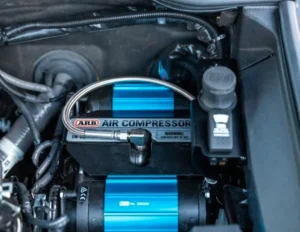
An LSD is not a locking differential. It cannot achieve 100% lock-up between the two wheels. During extreme situations, such as one wheel completely airborne or on sheet ice — even the most aggressive LSD may not transfer enough torque to the grounded wheel to move the vehicle. In such scenarios, a selectable locking differential (air locker, e-locker) is required.
Additionally:
- Clutch-type LSDs wear over time and require periodic rebuilds.
- Aggressive 2-way LSDs can make low-speed manoeuvring (parking, tight turns) feel heavy and cause tyre chirping.
- Viscous LSDs degrade in performance as the fluid ages and loses shear properties.
Which LSD Is Right for You?
| Use Case | Recommended Type |
|---|---|
|
Daily street driving with occasional spirited cornering |
1.5-way or helical gear |
|
Track days and time attack |
1.5-way clutch-type or cone-type |
|
Drag racing and straight-line performance |
Clutch-type Posi with aggressive preload |
|
Drifting |
2-way clutch-type or helical gear |
|
Off-road and overlanding |
Helical gear or selectable locker |
|
Classic muscle car restoration |
Cone-type or clutch-type Posi |
Maintenance and Installation Notes
A limited slip differential should be installed by a qualified mechanic or drivetrain specialist. Correct backlash, bearing preload, gear contact pattern, and oil selection are critical. Poor installation can cause gear noise, overheating, premature wear, or differential failure.
For clutch-type LSDs, the correct gear oil and friction modifier may be required. For helical gear LSDs, maintenance is usually simpler, but correct oil and professional installation are still important. After installation, a proper break-in process is often recommended, especially when a new ring and pinion gear set is installed at the same time.
Conclusion
A limited slip differential is one of the most effective upgrades for improving traction, handling, and vehicle control. Compared with an open differential, it gives the vehicle better ability to use available grip. Compared with a full locking differential, it is usually smoother and more suitable for mixed road use.
The best LSD depends on the vehicle and the driving purpose. For daily driving and performance street use, a helical gear LSD offers smooth and reliable torque biasing. For racing and drifting, clutch-type LSDs provide stronger and more adjustable locking behavior. For off-road and heavy-duty use, an LSD can be a major improvement over an open differential, but extreme terrain may still require an electric locker or air locker. No LSD can provide 100% lock-up; for extreme off-road use, a selectable locker remains the ultimate solution.