Why did the O-ring fail in the first place?
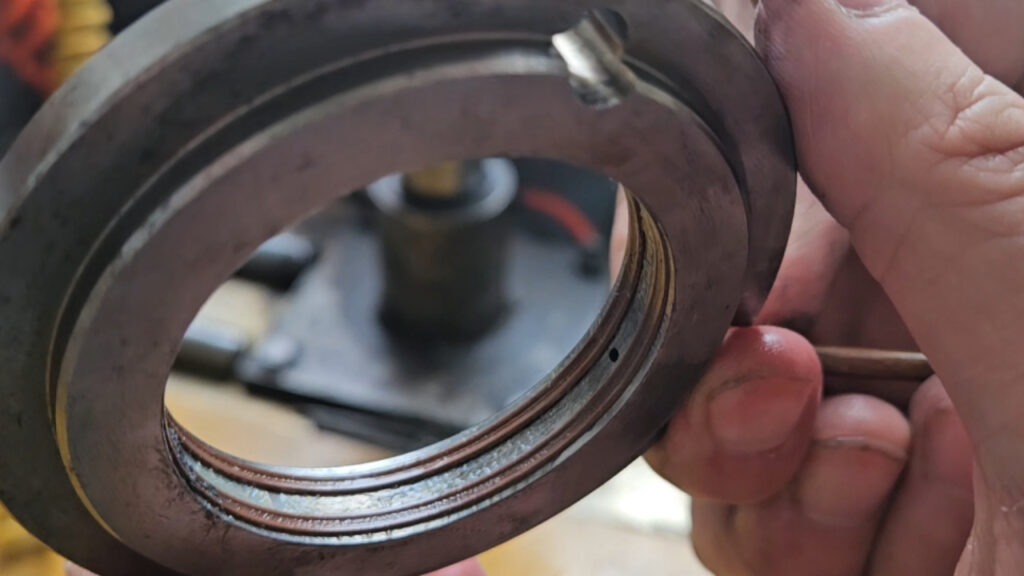
What does the O-ring actually do?
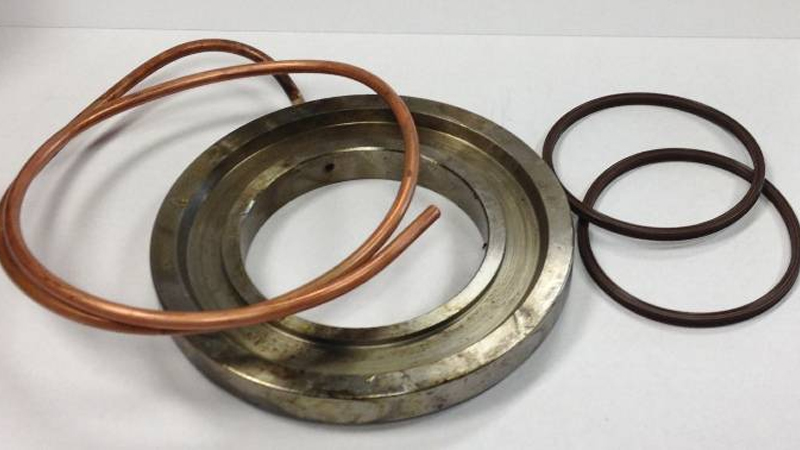
An air locker uses compressed air to move the internal locking mechanism.
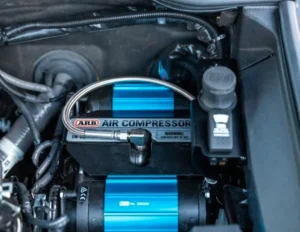
Air travels from the compressor, through the solenoid and air line, into the differential housing, and finally reaches the locker.
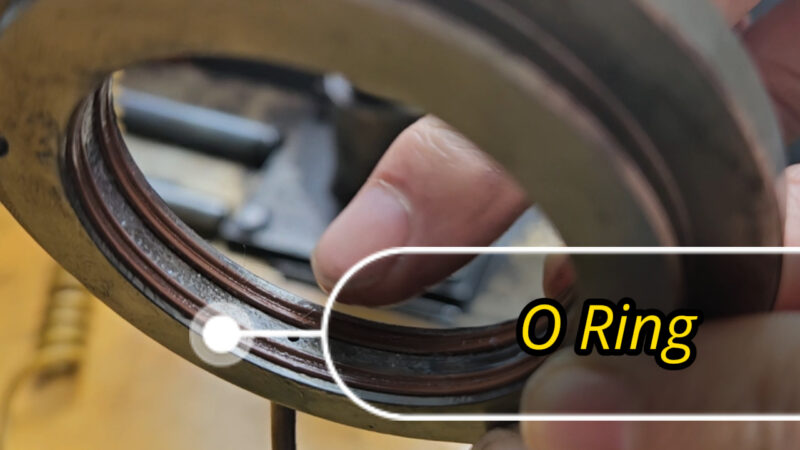
Inside the locker, the air pressure has to stay sealed. The O-rings around the seal housing are part of that sealing system.
The difficult part is that the differential carrier is rotating while the air supply side is stationary.
So these seals are not simply sitting between two fixed parts. They have to keep air pressure sealed while working around rotating components.
That means the condition of the seal, the sealing surface, the oil, and the installation all matter.
One common reason is dirty differential oil
This is one of the first things I would check.
Inside a differential, there can be very small metal particles coming from the ring and pinion, bearings, machining residue, or normal wear.
Usually these particles are too small to notice easily.
But if they reach the sealing area, they can gradually damage the O-ring or the surface where the O-ring runs.
It does not need to be a big scratch.
A very small line on the sealing surface may already be enough for compressed air to escape.
This is especially important after installing a new locker, new ring and pinion, or new bearings.
If the axle housing was not cleaned properly before assembly, metal debris may stay inside.
That is why I always believe cleaning the differential housing is just as important as installing the locker itself.
You can install a very good locker, but if the housing is full of contamination, the seals will still suffer.Sometimes the O-ring is damaged during installation
This happens more often than people think.
An O-ring can look very simple, but it is easy to damage during assembly.
For example, it may be slightly cut by a sharp edge, twisted inside the groove, pinched during installation, or stretched more than necessary.
The damage may be so small that you cannot see it clearly.
Then the locker is installed, the compressor is switched on, and the system begins losing pressure.
At first, the leak may be very small.
The locker still works, but the compressor starts cycling more often.
Later, the leak gets worse and the customer says the locker cannot stay engaged.
So when installing the seal housing, I would never force it into place.
The O-rings should be clean, properly lubricated, and the grooves should also be checked before assembly.
If there is already visible damage on the O-ring, replacing it before installation is much cheaper than opening the differential again later.A new O-ring will not fix a damaged sealing surface
This is probably one of the most overlooked problems.
Many people find a leak and immediately replace the O-ring.
But they do not check the metal surface underneath it.
If that surface has a scratch, burr, rust mark, or uneven wear, the new O-ring may start leaking again.
I normally explain it this way:
Putting a new seal on a badly damaged surface is like putting a new wiper blade on a deeply scratched windshield.
The new part cannot repair the surface it is working against.
So if an air locker keeps leaking after the O-rings have already been replaced, I would inspect the seal housing and sealing surface very carefully.
Look for scratches, corrosion, burrs, and abnormal wear.
Sometimes the real repair is not just changing the rubber seal.Water inside the axle can also create problems
This is very common on off-road vehicles.
People drive through mud, rivers, deep water, snow, and wet sand. That is exactly what these vehicles are built for.
But if the axle breather does not work properly, water can enter the differential housing.
Once water mixes with differential oil, corrosion may begin.
The problem is not only the oil.
If rust develops on the area where the O-ring runs, the surface becomes rough.
A rough surface can quickly damage a pneumatic seal.
This is why vehicles used for water crossings should have their axle breathers checked regularly.
If you drain the differential oil and it looks milky or cloudy, that is already a warning sign that water has entered the housing.
In that situation, I would not only change the oil.
I would also inspect the bearings, gears, and sealing surfaces.And sometimes the leak is not coming from the O-ring at all
This is very important.
When a customer says, “The O-ring is leaking,” I would not immediately agree.
The whole air system needs to be checked.
The leak may come from the compressor connection, solenoid, air hose, bulkhead fitting, internal air tube, or seal housing.
All of these points can cause similar symptoms.
For example, if the external air line has a small cut, the compressor may keep switching on.
If the bulkhead fitting is loose, pressure will also drop.
If the internal air tube is cracked or damaged by the ring gear, the locker may not receive enough pressure.
From the driver’s point of view, all of these problems may feel exactly the same:
“The air locker is leaking.”
That is why proper diagnosis is much better than replacing parts blindly.What symptoms usually appear when there is an air leak?
The most common one is frequent compressor cycling.
You engage the locker, the compressor builds pressure, and then after a short time it starts again.
That normally means the system is losing pressure somewhere.
Another symptom is slow engagement.
You press the locker switch, but the differential takes longer than normal to lock.
If the leak becomes larger, the locker may engage first and then disengage because the pressure cannot stay high enough.
In more serious cases, it will not lock at all.
When this happens, I usually recommend checking the simple things first before opening the differential.How I would check an Air Locker leak?
I normally start from the outside and work inward.
First, check whether the compressor is building pressure normally.
Then inspect the air line.
Look for cuts, melted sections, kinks, loose fittings, or places where the hose may have rubbed against the chassis.
After that, check the bulkhead fitting.
For external fittings, soapy water is a very simple and effective test. If bubbles appear, you have already found one leak point.
If everything outside is good but the system still loses pressure, then the internal parts need more attention.
At that stage, inspect the internal air tube, seal housing, O-rings, grooves, and sealing surfaces.
This process may take a little more time, but it is much better than replacing an O-ring and hoping the problem disappears.Do Air Locker O-rings need to be changed regularly?
Normally, no.
I would not consider these O-rings to be parts that must be replaced every few months or every year.
If the locker is installed correctly, the differential oil is clean, the sealing surface is in good condition, and there is no water contamination, the seals can last a long time.
So if the same locker keeps damaging O-rings, I would definitely look deeper.
Repeated seal failure usually means there is another reason behind it.
Maybe contamination.
Maybe a damaged surface.
Maybe incorrect installation.
Maybe a damaged internal air line.
Changing the O-ring again may only temporarily hide the real problem.
Conclusion
When an air locker leaks, it is very easy to blame the O-ring because it is the most obvious sealing part.
But in my experience, that is not always fair.
The O-ring is only one part of the complete system.
The locker depends on clean oil, good sealing surfaces, correct differential setup, proper air line installation, and stable air pressure.
If any of these areas have a problem, the O-ring may eventually become the part that fails first.
So when dealing with an air leak, I would always follow one rule:
Do not just replace the O-ring. Find out why it started leaking.
That usually saves much more time, money, and frustration in the long run.