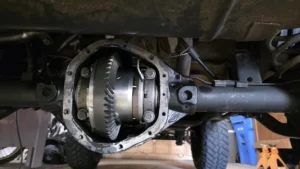

When an off-road vehicle climbs over wet rocks, crosses deep ruts or drives through loose mud, one wheel can easily lose contact with the ground.
The driver presses the accelerator, but the vehicle does not move. One wheel spins quickly while the wheel with traction receives too little power.
This is exactly where a differential locker becomes useful.
A locker connects the left and right wheels on the same axle, allowing both wheels to rotate together. Even if one wheel is lifted into the air, the wheel touching the ground can still receive enough torque to move the vehicle forward.
Among selectable differential lockers, air lockers and electric lockers are the two most common options. Both can provide excellent traction, but they operate differently and have different advantages.
Why Is a Differential Locker Needed?
During normal road driving, the left and right wheels need to rotate at different speeds.
When a vehicle turns, the outside wheel travels farther than the inside wheel. An open differential allows this difference, making the vehicle easier to steer.
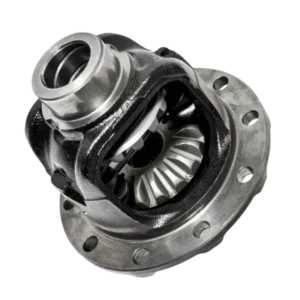
However, an open differential has a weakness.
When one wheel loses traction, most of the wheel speed may go to the slipping wheel. The wheel that still has grip may not receive enough usable torque.
This often happens when:
- One wheel is lifted off the ground
- The vehicle crosses deep ruts
- The road is covered with mud or snow
- The vehicle climbs loose rocks
- One tire is on a slippery surface
- The suspension reaches maximum articulation
A differential locker changes this situation.
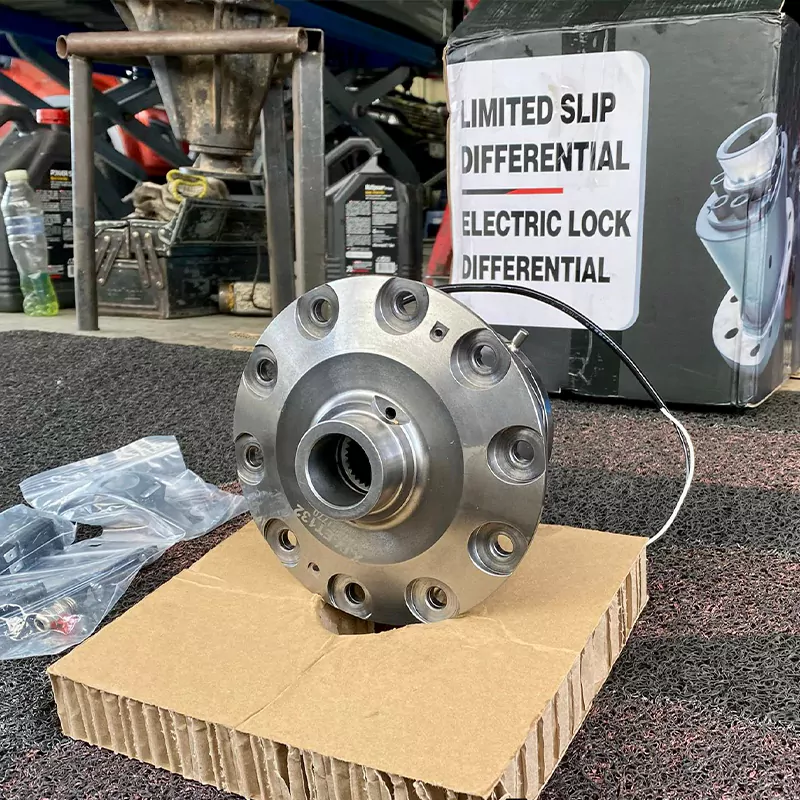
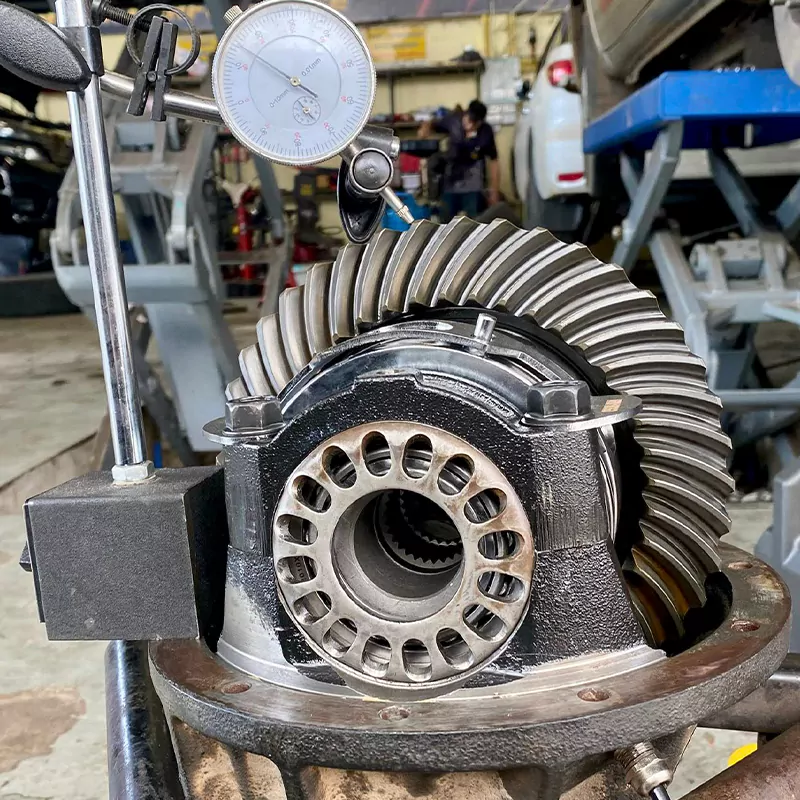
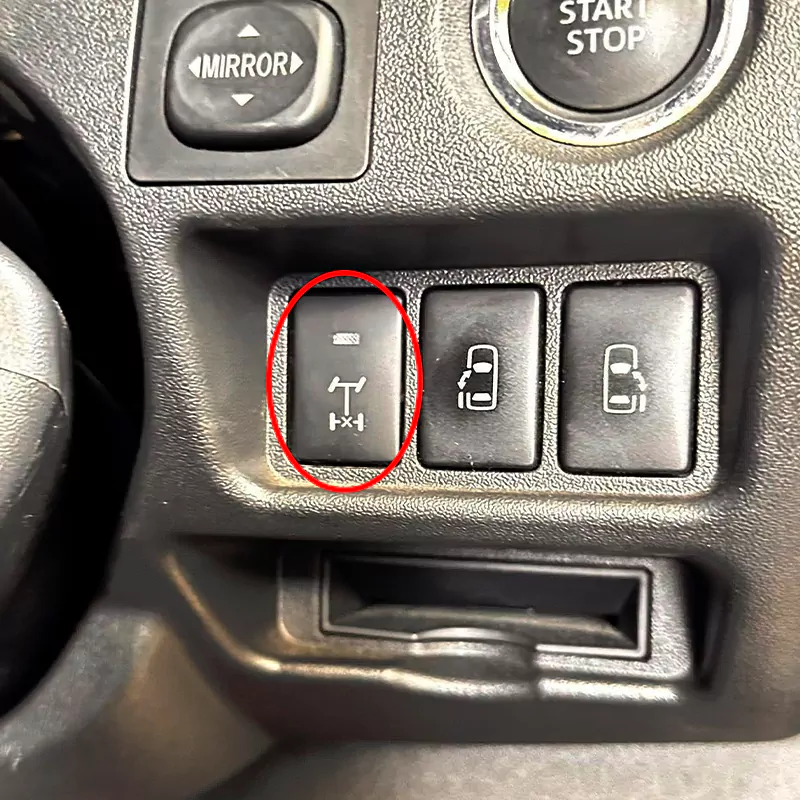
Once engaged, it connects both axle shafts so that the two wheels rotate at the same speed. Instead of allowing one wheel to spin freely, the locker sends driving force to both sides of the axle.
What Is an Air Locker?
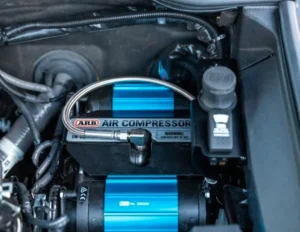
An air locker uses compressed air to activate the locking mechanism inside the differential.
When the driver presses the switch, the compressor sends air pressure through an airline. The air pressure moves an internal locking collar or clutch gear, connecting the side gear to the differential carrier.

The differential then changes from open operation to fully locked operation.
When the locker is switched off, the differential returns to normal, allowing the two wheels to rotate independently.
A complete air-locker system normally includes:
- A locking differential
- An air compressor
- Air tubing
- Solenoid valves
- Seals and O-rings
- Electrical switches and wiring
The main advantage is direct control. The driver can decide exactly when the axle should remain open and when it should be fully locked.
What Is an Elec Locker?
An elec locker performs the same basic function, but it uses an electrical actuator instead of compressed air.
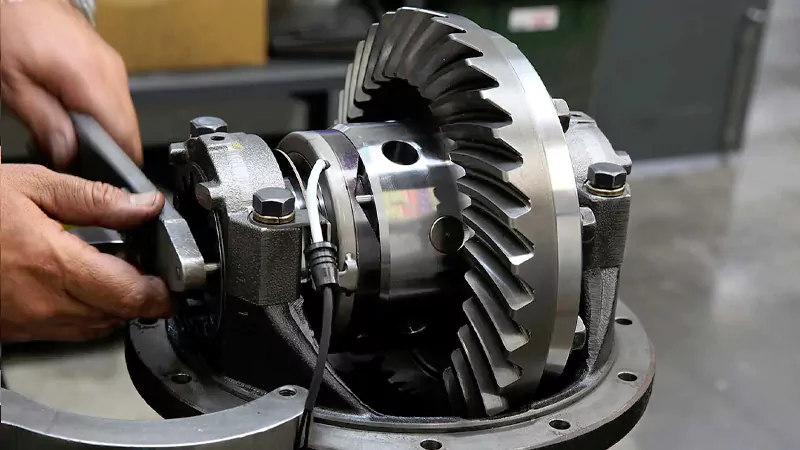
Depending on the internal design, the locking mechanism may be activated by an electric motor, electromagnetic coil or solenoid.
Because an elec locker does not need a compressor or air tubing, the external system is generally simpler. Installation may also require fewer supporting components.
However, elec lockers do not all engage in the same way.
Some engage almost immediately. Others need the vehicle to move slightly so that the internal locking teeth can align. Certain factory systems may also operate only in low-range four-wheel drive or below a specified speed.
The exact operating method depends on the design of the locker and the vehicle.
Air Locker vs. Elec Locker
Both systems can create a fully locked differential. The main difference is how the locking mechanism is activated.
Engagement
An air locker can engage quickly when the compressor has already built sufficient pressure.
Some elec lockers may require a small amount of wheel movement before the locking mechanism fully engages. This can create a brief delay between pressing the switch and achieving full lock.
In real off-road driving, both systems can work effectively when used correctly.
System structure
An elec locker has fewer pneumatic components. There is no compressor, air tube or pneumatic seal to maintain.
An air locker has more supporting parts, but the compressor may also be used to inflate tires or operate other pneumatic equipment.
Possible failure points
An air-locker system may experience:
- Air leakage
- Damaged tubing
- Contaminated O-rings
- Loose fittings
- Compressor problems
- Incorrect internal tube installation
An elec-locker system may experience:
- Wiring damage
- Connector corrosion
- Actuator failure
- Electrical control problems
- Failure of the internal locking mechanism
Neither type is completely maintenance-free. Installation quality is often more important than whether the locker is operated by air or electricity.
When Is a Front Locker Useful?
Many off-road vehicles already have a rear locker, but a front locker can provide additional traction in more demanding conditions.
Cross-axle situations
When the front-left and rear-right wheels lose traction, or the opposite pair becomes unloaded, the vehicle may stop moving.
A front locker keeps both front wheels driving, even when one wheel is lifted.
Rock climbing
When one front wheel climbs onto a rock, a locked front axle allows that wheel to pull the vehicle forward.
Without a locker, the opposite wheel may simply spin.
Deep ruts
When the suspension is heavily articulated, one front wheel may carry very little weight. A locker prevents that lightly loaded wheel from taking most of the wheel speed.
Steep, loose climbs
On wet rocks, mud or loose gravel, both front wheels may need to work together to maintain forward movement.
A front locker can provide the additional traction needed to continue climbing without excessive wheelspin.
The Correct Way to Engage a Locker
A selectable locker should ideally be engaged before entering a difficult obstacle.
The vehicle should be stopped or moving slowly, and both wheels should be rotating at approximately the same speed.
Avoid engaging the locker when:
- One wheel is spinning rapidly
- The accelerator is fully pressed
- The drivetrain is under heavy load
- The vehicle is bouncing
- The wheels are turned sharply
- The locking teeth cannot align properly
If one wheel is rotating much faster than the other, sudden engagement can damage the internal locking components.
A good general practice is to reduce throttle, straighten the wheels and allow the wheel speeds to equalize before activating the locker.
Conclusion
Air lockers and elec lockers can both provide strong, reliable off-road traction.
An air locker offers positive engagement and flexible control, but it depends on correct installation, clean seals and protected air tubing.
An elec locker has a simpler external structure, but its performance still depends on reliable wiring, actuators and internal locking components.
Compared with brake-based traction control, a mechanical locker provides more direct and predictable torque delivery. However, traction control may be easier to use during tight turns, side slopes and slippery descents.
The key is not to keep the differential locked at all times.
A locker should be engaged before difficult obstacles, used with controlled throttle and disengaged when independent wheel movement becomes more important.
When selected carefully and installed correctly, a differential locker can become one of the most effective traction upgrades for an off-road vehicle.